






What's Happening?
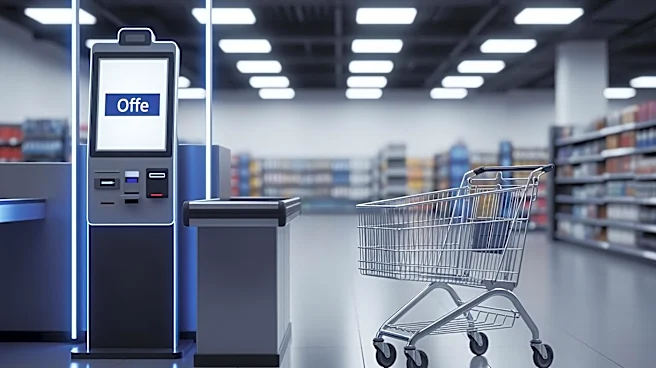
Walmart is removing self-checkout machines from some of its stores in response to increasing theft incidents across the United States. The retail giant is rethinking its approach to customer service by eliminating these machines in certain locations,
such as a store in South Philadelphia. This decision is part of a broader strategy to remodel over 650 stores, focusing on enhancing customer service by reintroducing staffed checkouts. The move comes as self-checkouts have been identified as a significant source of theft, with reports indicating that losses from these machines can be substantially higher than those from traditional staffed checkouts. Other retailers, including Target, Costco, and Dollar General, are also scaling back on self-checkouts, implementing stricter rules or removing them entirely in some locations.
Why It's Important?
The decision by Walmart and other retailers to reduce self-checkouts highlights a significant shift in the retail industry’s approach to theft prevention and customer service. Self-checkouts, once seen as a way to streamline shopping and reduce labor costs, have become a liability due to high theft rates. This change could impact the retail sector by increasing operational costs as more staff are required to manage checkouts. Additionally, it reflects a broader industry trend towards balancing technology with human oversight to enhance security and customer satisfaction. The move also signals potential changes in retail employment, with a possible increase in demand for checkout staff.
What's Next?
As retailers like Walmart continue to adjust their strategies, new state laws are being considered to regulate self-checkout usage. States such as California, Connecticut, and New York are exploring regulations that could include item limits and staffing requirements to curb misuse. These legislative efforts could lead to a more standardized approach to self-checkouts across the country. Retailers may also invest in alternative technologies, such as Scan & Go, to maintain efficiency while reducing theft. The retail industry will likely monitor the effectiveness of these changes and adjust their strategies accordingly.