



What's Happening?
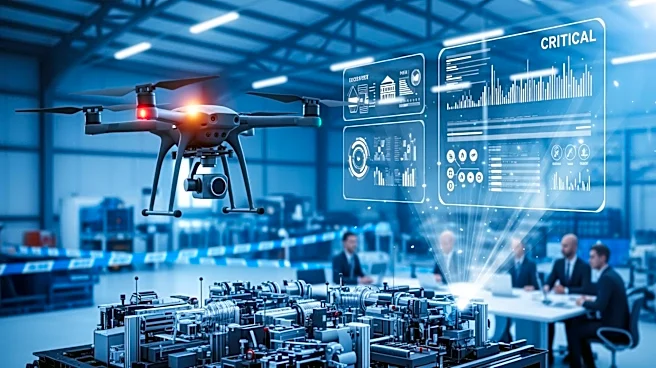
Drones are increasingly being utilized in manufacturing facilities to address challenges such as margin pressure, labor shortages, and the need for efficient asset management. These drones are equipped with advanced technologies like barcode scanners
and computer vision systems, enabling them to perform tasks such as inventory tracking and inspection of hard-to-reach areas. The integration of drone data into enterprise systems like ERP and MES platforms is crucial for maximizing their value. This integration helps reduce working capital tied up in excess stock and decreases production delays. Additionally, drones equipped with high-resolution visual, thermal, and lidar payloads are transforming industrial inspections, allowing for safer and more frequent assessments of equipment and infrastructure.
Why It's Important?
The adoption of drones in manufacturing is significant as it offers a solution to several industry challenges, including labor shortages and the need for efficient asset management. By integrating drone data into operational systems, manufacturers can enhance decision-making processes, reduce downtime, and improve safety. The use of drones for inspections can significantly cut costs and reduce the risk of accidents by eliminating the need for personnel to work at heights or in confined spaces. In regulated industries, drones provide timestamped and georeferenced data that strengthens compliance documentation and audit readiness. The financial impact is notable, with potential reductions in inspection costs and downtime, making drones a strategic asset in the manufacturing sector.
What's Next?
As drone technology continues to evolve, manufacturers are expected to further integrate these tools into their operations. The next stage involves autonomous drone operations, where drones will perform scheduled inspection missions from fixed docking stations. Data collected will be analyzed in real-time using AI-enabled platforms, enhancing the speed and accuracy of defect detection. Manufacturers will need to address potential challenges such as cybersecurity risks and workforce displacement concerns. By aligning with cybersecurity standards and providing structured training for employees, manufacturers can ensure the responsible scaling of drone programs, ultimately enhancing their operational capabilities.
Beyond the Headlines
The integration of drones into manufacturing processes represents a broader shift towards digital transformation in the industry. The development of digital twins, supported by drone data, allows for remote assessments and design modifications, reducing the need for physical presence and travel costs. This shift not only improves operational efficiency but also supports sustainability goals by minimizing the environmental impact of manufacturing activities. As drones become more autonomous and capable, they will play a crucial role in the future of smart manufacturing, driving innovation and competitiveness in the industry.