
What's Happening?
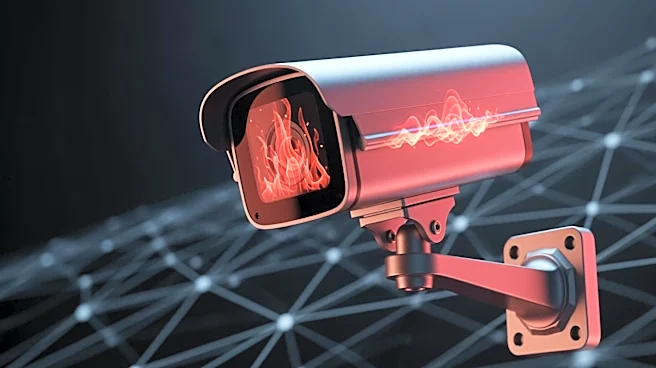
IREX, a leader in ethical AI and video analytics, has launched an updated version of its FireTrack smoke and fire detection module. This new system is designed to work with existing camera networks, eliminating
the need for additional hardware. The update enhances the module's applicability to various infrastructures, including energy facilities, schools, hospitals, and natural parks. The system processes visual data in approximately 0.1 seconds, allowing for rapid identification of potential fire hazards. By using segmentation instead of traditional bounding boxes, the system applies color masks to accurately identify fire and smoke, reducing false alarms and enabling quicker response times. This advancement is part of IREX's mission to deploy intelligent AI solutions to address critical global challenges.
Why It's Important?
The introduction of IREX's updated FireTrack module represents a significant advancement in fire safety technology. By utilizing existing camera networks, the system offers a cost-effective solution for enhancing fire detection capabilities without the need for new hardware installations. This is particularly beneficial for cities and organizations looking to improve safety measures in a budget-conscious manner. The ability to quickly and accurately detect fire hazards can prevent catastrophic losses and improve the efficiency of emergency response teams. As fire safety is a critical concern for both urban and rural areas, this technology has the potential to save lives and protect property on a large scale.
What's Next?
With the launch of the updated FireTrack module, IREX is likely to see increased adoption of its technology across various sectors. Organizations and municipalities may begin integrating this system into their existing surveillance infrastructure to enhance fire safety measures. As the technology proves its effectiveness, it could lead to further innovations in AI-driven safety solutions. Additionally, the success of this system may encourage other companies to develop similar technologies, potentially leading to a broader market for AI-based safety solutions.