






What's Happening?
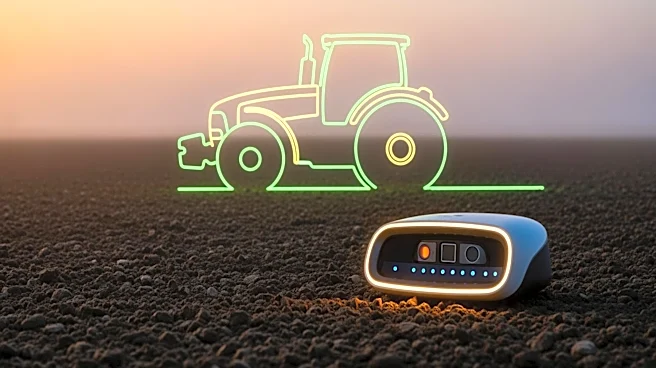
Nivavi, a company based in Zwolle and founded by Dutch engineer Niels van Vilsteren, has unveiled its new autonomous retrofit kit system named 'Bart'. This system is designed to convert standard tractors into robotic tractors, allowing them to operate
both manually and autonomously. The Bart system takes full control of the tractor, including the operation of any attached implements. It uses RTK GPS for precise positioning and is equipped with a LiDAR sensor for safety, scanning the surroundings to ensure safe operation. The system has been tested as a prototype under the name RoboDrive and is set to be launched on the market early next year. Nivavi's introduction of Bart adds to the growing market of autonomous retrofit kits, with GPX Solutions' iQuus system being another notable player in the Netherlands.
Why It's Important?
The introduction of Nivavi's Bart system represents a significant advancement in agricultural technology, offering farmers a way to enhance efficiency and reduce labor costs. By automating the operation of tractors, farmers can potentially increase productivity and focus on other critical aspects of farm management. The use of autonomous systems like Bart could lead to more precise farming practices, reducing waste and improving crop yields. This development is part of a broader trend towards smart farming, which integrates technology to optimize agricultural processes. As the agricultural sector faces challenges such as labor shortages and the need for sustainable practices, innovations like Bart could play a crucial role in addressing these issues.
What's Next?
Nivavi plans to officially launch the Bart system early next year, following its display at Akkerbouwdag 2026 in Lelystad. As the system enters the market, it will be interesting to observe how farmers adopt this technology and the impact it has on farming operations. The success of Bart could encourage further innovation and competition in the field of autonomous agricultural machinery. Additionally, the response from the agricultural community and potential regulatory considerations will be key factors in the system's adoption and integration into existing farming practices.