
What's Happening?
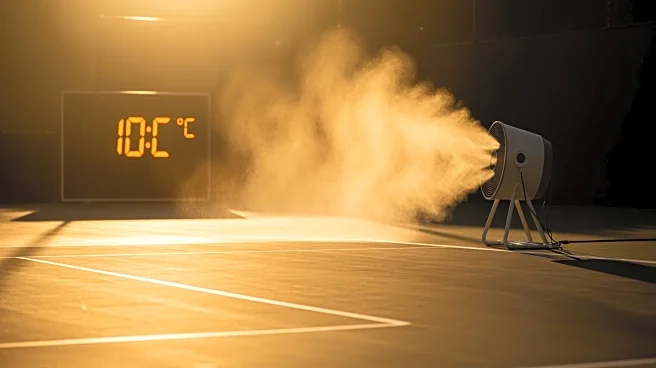
At the Australian Open, extreme heat rules were activated, leading to the suspension of play on outside courts and temporary halts in undercover arenas. The decision was made as temperatures soared to 35
degrees Celsius (95 Fahrenheit), with forecasts predicting highs of 40 degrees Celsius (104 Fahrenheit). Defending champion Jannik Sinner was affected during his match against Eliot Spizzirri, as play was paused to close the roof on Rod Laver Arena. Similarly, matches on John Cain Arena were suspended for the same reason. The heat index reached a level 5, prompting a halt expected to last at least three hours. Despite the heat, American players Madison Keys and Jessica Pegula successfully completed their morning matches, advancing to face each other in the fourth round. The night session featured notable players like Novak Djokovic and Naomi Osaka, with Djokovic aiming for his 25th Grand Slam title.
Why It's Important?
The implementation of heat rules at the Australian Open highlights the challenges extreme weather poses to sporting events. Such conditions can impact player performance, health, and the overall schedule of the tournament. For players, especially those unaccustomed to such heat, the conditions can lead to physical strain and affect match outcomes. The tournament organizers' decision to pause matches underscores the importance of player safety and the need for adaptive measures in response to climate conditions. This situation also reflects broader concerns about climate change and its impact on global sports events, potentially influencing future policies and infrastructure planning for major tournaments.
What's Next?
As the tournament progresses, players and organizers will need to remain vigilant about weather conditions. The heat policy may continue to be enforced if temperatures remain high, potentially affecting the scheduling and outcomes of future matches. Players will need to adapt their strategies and preparation to cope with the heat, which could influence their performance and progression in the tournament. Additionally, the situation may prompt discussions among tennis governing bodies about standardizing heat policies across tournaments to ensure player safety and consistency in handling extreme weather conditions.