



What's Happening?
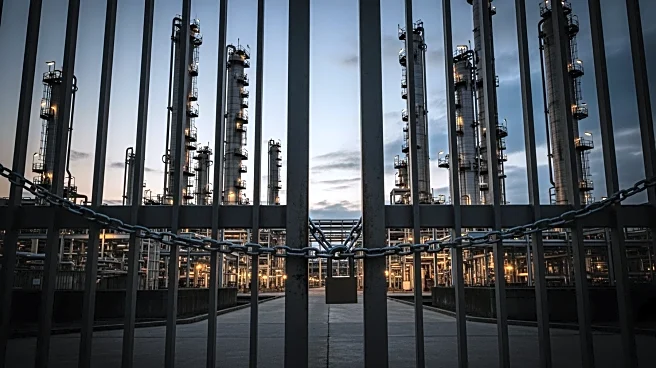
BP's Whiting refinery, located near Chicago, has initiated a lockout following unsuccessful contract negotiations with the union. The refinery, which is BP's largest globally, producing 440,000 barrels of oil per day, has been in talks with the union for
several months. The lockout marks a significant escalation in the labor dispute, affecting operations at a critical facility in BP's portfolio. The decision to lock out workers comes after both parties failed to reach an agreement on contract terms, highlighting ongoing tensions between management and labor at the site.
Why It's Important?
The lockout at the Whiting refinery underscores the challenges BP faces in managing labor relations at one of its key facilities. As the largest refinery in BP's network, any disruption in operations could have significant implications for the company's supply chain and financial performance. The situation also reflects broader labor issues in the energy sector, where companies are under pressure to balance cost-cutting measures with fair labor practices. The outcome of this dispute could set a precedent for future negotiations and impact BP's reputation as an employer.
What's Next?
The lockout is likely to continue until BP and the union can reach a new agreement. Both parties may seek mediation or other forms of negotiation to resolve the impasse. In the meantime, BP will need to manage the operational and financial impacts of the lockout, including potential disruptions to production and supply. The situation may also attract attention from regulators and industry observers, who will be monitoring how BP handles the labor dispute and its implications for the broader energy market.