



What's Happening?
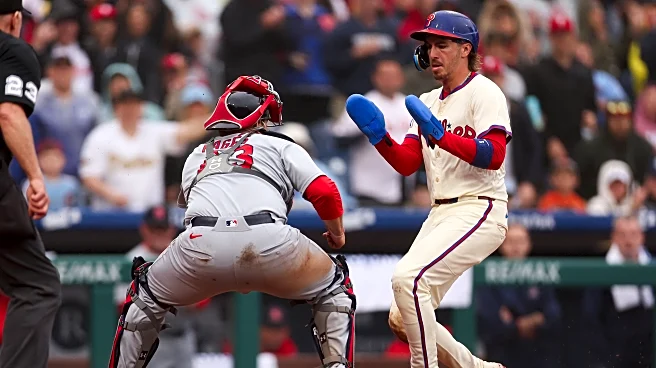
Max Kepler, a free agent outfielder, has been suspended for 80 games by Major League Baseball after testing positive for epitrenbolone, a performance-enhancing drug. This substance is listed as an anabolic agent on the World Anti-Doping Agency's prohibited list. Kepler's suspension is a result of violating MLB's Joint Drug Prevention and Treatment Program. The 32-year-old athlete began his MLB career with the Minnesota Twins in 2015, playing 1,072 games with the team until 2024. In 2025, he signed a one-year contract worth $10 million with the Philadelphia Phillies, where he participated in 127 games, achieving a batting average of .216, with 18 home runs and 52 RBIs. Over his career, Kepler has maintained a .235 batting average, with 179 home runs,
560 RBIs, a .425 slugging percentage, and a .316 on-base percentage.
Why It's Important?
The suspension of Max Kepler highlights ongoing issues within professional sports regarding the use of performance-enhancing drugs. This incident underscores the challenges MLB faces in maintaining fair play and integrity within the sport. For Kepler, this suspension could significantly impact his career, especially as a free agent seeking new opportunities. The suspension also serves as a reminder to other athletes about the strict enforcement of drug policies and the potential career ramifications of violations. For MLB, this case reinforces the importance of their drug prevention programs and the need for continued vigilance in testing and enforcement to uphold the sport's reputation.
What's Next?
Following the suspension, Max Kepler will need to serve the 80-game penalty before he can return to play. This period could affect his marketability as a free agent, potentially influencing contract negotiations with prospective teams. MLB will likely continue to monitor and enforce its drug policies to prevent similar incidents. Teams may also become more cautious in their vetting processes when signing new players, emphasizing the importance of clean records in player evaluations. The league's ongoing commitment to drug testing and prevention will remain a critical component of its efforts to ensure fair competition.