


What's Happening?
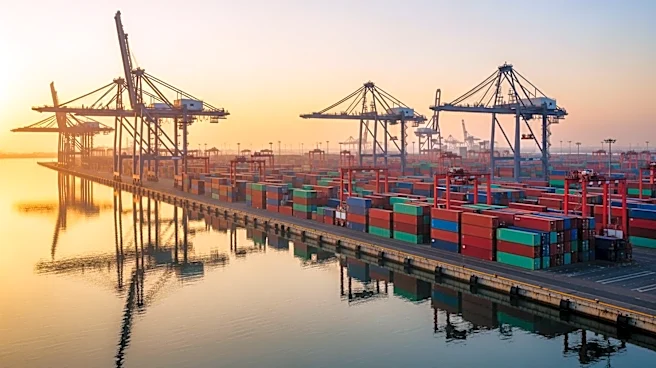
The global supply chain has faced significant disruptions over the past decade, exacerbated by events such as the COVID-19 pandemic and rising geopolitical tensions. These challenges have exposed the fragility of traditional supply chains, particularly
in the maritime and energy sectors, where assets often exceed 20 years of age and rely on legacy parts. Original Equipment Manufacturers (OEMs) are now exploring alternative production models to address these issues. One such model is on-demand manufacturing, which leverages digital inventories and a global network of verified manufacturing partners to produce parts closer to the point of need. This approach allows OEMs to maintain control over design, quality, and traceability while improving responsiveness. Companies like Pelagus are facilitating this shift by providing secure digital inventories and access to distributed manufacturing capacity.
Why It's Important?
The shift towards on-demand manufacturing is significant as it addresses the limitations of traditional supply chains, which are often inflexible and capital-intensive. By digitizing parts and utilizing a network of manufacturing partners, OEMs can reduce lead times and avoid the risks associated with the 'gray market' of non-genuine parts. This model not only ensures the availability of critical components but also maintains high standards of quality and compliance with industry regulations. The ability to produce parts on-demand is particularly crucial for the maritime and energy sectors, where operational efficiency and safety are paramount. As the industry adapts to this new model, it could lead to broader adoption across other sectors facing similar supply chain challenges.
What's Next?
The adoption of on-demand manufacturing is expected to follow a trajectory similar to that of CNC machining in the 1990s, with initial slow uptake followed by rapid acceleration as early adopters demonstrate its benefits. As more OEMs recognize the advantages of this model, it is likely to become a standard practice in the industry. This shift will require OEMs to invest in digital capabilities and establish trust with manufacturing partners to protect intellectual property and ensure compliance with technical and regulatory standards. The continued evolution of this model could lead to further innovations in supply chain management, enhancing the resilience and efficiency of global logistics networks.