
What's Happening?
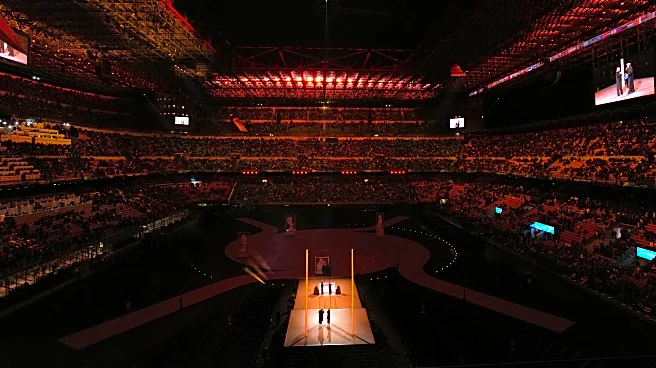
Mariah Carey performed at the Milan Cortina Winter Olympics Opening Ceremony, delivering a rendition of the Italian classic 'Nel Blu Dipinto di Blu,' also known as 'Volare.' Her performance was a highlight
of the event, receiving praise for her vocal prowess. However, it also sparked controversy and debate online, with some questioning why an Italian singer was not chosen for the honor. Additionally, there were speculations about Carey lip-syncing, fueled by the presence of a large teleprompter displaying phonetic Italian lyrics. The International Olympic Committee and local organizers were questioned about these issues during a news conference, but they did not directly address the lip-syncing allegations. Instead, they praised Carey's performance as exceptional and noted that pre-recorded performances are standard for international broadcasts.
Why It's Important?
The controversy surrounding Mariah Carey's performance highlights ongoing discussions about authenticity and representation in international events. The use of a non-Italian artist for a culturally significant performance raises questions about cultural appropriation and the importance of local representation. Furthermore, the lip-syncing debate touches on broader issues of performance authenticity in the music industry, where live performances are often scrutinized for their genuineness. This incident may influence future decisions by event organizers regarding artist selection and performance practices, potentially leading to more transparent and culturally sensitive approaches.
What's Next?
While the immediate reactions have been mixed, the incident may prompt the International Olympic Committee and other event organizers to reconsider their approach to selecting performers for culturally significant events. There could be increased pressure to prioritize local artists and ensure that performances are perceived as authentic by audiences. Additionally, the music industry might face renewed scrutiny over the use of pre-recorded tracks in live performances, potentially leading to calls for greater transparency and authenticity in future events.