


What's Happening?
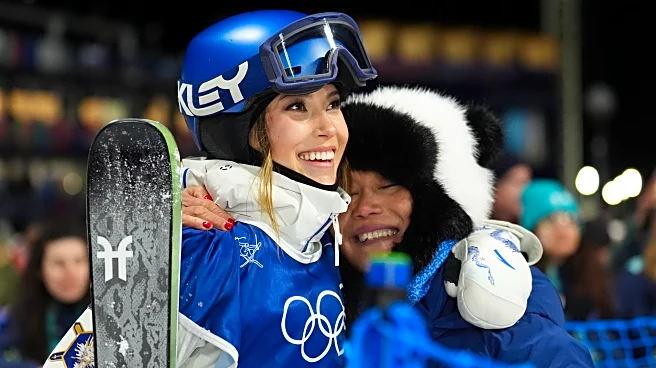
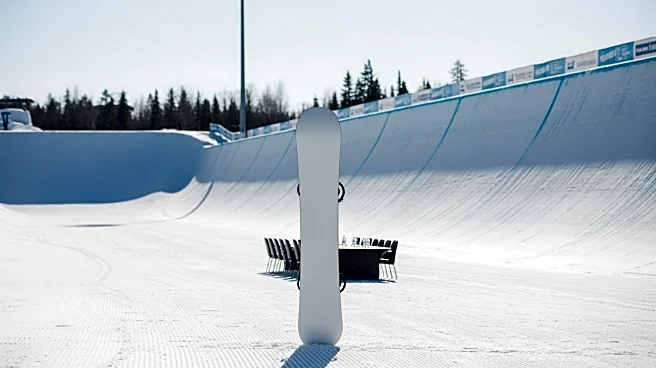
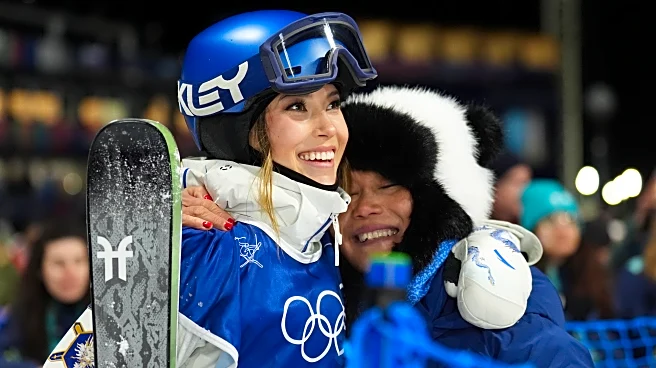
Eileen Gu, a prominent freestyle skier competing for China, expressed disappointment with the International Ski and Snowboard Federation (FIS) for not accommodating her training schedule at the 2026 Winter Olympics in Milan Cortina. Gu, who is competing in all three freestyle skiing disciplines—slopestyle, halfpipe, and big air—requested additional training time for the halfpipe event, which overlaps with the big air final. Despite her efforts to negotiate a compromise, such as joining snowboarders' training sessions, FIS maintained that altering the schedule for one athlete would be unfair to others. Gu, who has previously won multiple medals, including a gold in big air at the Beijing Olympics, emphasized the importance of fair training opportunities
for all athletes.
Why It's Important?
The situation highlights the challenges faced by multi-discipline athletes in major sporting events like the Olympics. Gu's case underscores the need for flexible scheduling to ensure fair competition, especially for athletes who excel in multiple events. The decision by FIS not to adjust the schedule could impact Gu's performance and medal prospects, potentially affecting her standing and the overall medal tally for China. This incident also raises broader questions about the balance between logistical constraints and athlete welfare in international competitions.
What's Next?
Gu is set to compete in the big air final, followed by the halfpipe qualifiers and final. Her performance in these events will be closely watched, given the training challenges she faces. The outcome may prompt further discussions among Olympic organizers and sports federations about scheduling practices and athlete support. Stakeholders, including national sports bodies and athlete representatives, might advocate for more athlete-friendly policies in future games.