







What's Happening?
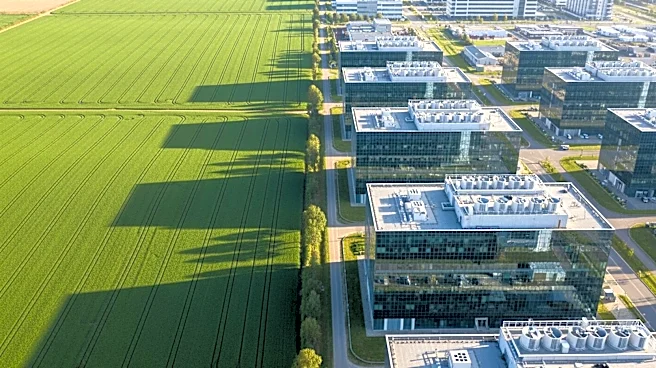
The Mountain West region is experiencing a shift in data center growth towards rural areas, with new proposals emerging in cities like Reno, Denver, and Phoenix. This trend is part of a broader national movement where data centers are increasingly being
planned in rural areas, driven by the demand for artificial intelligence and cloud computing. However, these proposals are facing local opposition due to concerns about the significant water and energy consumption of these facilities, as well as potential noise and air pollution impacts. The Pew Research Center reports that nearly 40% of planned data center projects are in counties without existing facilities, marking a significant shift from the traditional urban and suburban locations.
Why It's Important?
The expansion of data centers into rural areas of the Mountain West could have significant economic and environmental implications. On one hand, it could bring economic development and job opportunities to these regions. On the other hand, the environmental concerns raised by local communities highlight the potential negative impacts on local resources and ecosystems. The increased demand for water and energy could strain local supplies, while noise and air pollution could affect the quality of life for residents. This situation underscores the need for careful planning and community engagement to balance economic benefits with environmental sustainability.
What's Next?
As more data center projects are proposed in rural areas, it is likely that public awareness and scrutiny will increase. Local governments and community groups may push for stricter regulations and environmental assessments to address the concerns raised. Additionally, data center companies may need to invest in more sustainable practices and technologies to mitigate their environmental impact. The outcome of these developments could influence future data center planning and policy decisions across the U.S.