






What's Happening?
Tesla Inc. has disclosed that CEO Elon Musk's compensation for 2025 amounts to $158 billion, marking the first time the company has tallied his annual pay since shareholders approved a significant pay package. This figure includes the maximum grant date
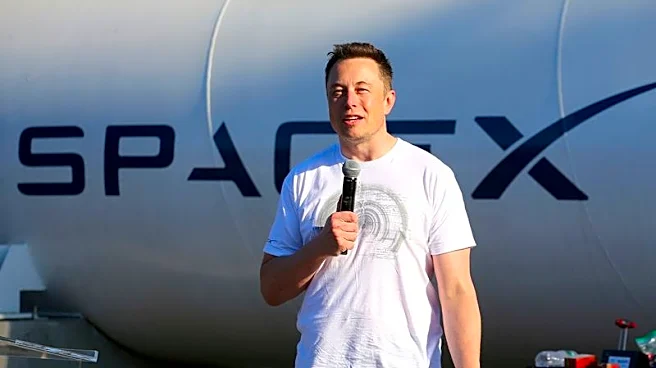
fair value of the award Musk received, assuming all performance conditions are met. The compensation package, which was approved by investors, is part of a $1 trillion stock award aimed at rewarding Musk for his role in transforming Tesla into a leader in the electric vehicle market. Despite this, Tesla has faced challenges such as increased competition from China and a stagnant product lineup. Additionally, Tesla reported generating over half a billion dollars in revenue from sales to other Musk-run companies, including xAI and SpaceX.
Why It's Important?
The disclosure of Musk's compensation highlights the growing trend of substantial executive pay packages, particularly for leaders seen as pivotal to their companies' success. Musk's compensation is tied to Tesla's performance, incentivizing him to drive the company's growth and innovation. However, the package also underscores the disparity in executive compensation compared to average employee wages, raising questions about income inequality. Furthermore, Tesla's financial interactions with other Musk-led ventures, such as xAI and SpaceX, illustrate the interconnected nature of his business empire, which could have implications for corporate governance and financial transparency.
What's Next?
Looking ahead, Tesla's performance and Musk's ability to meet the conditions of his compensation package will be closely monitored by investors and analysts. The company's strategy to address competition and expand its product lineup will be critical in achieving the operational milestones required for Musk to realize the full value of his compensation. Additionally, the financial relationships between Tesla and other Musk-run companies may attract scrutiny from regulators and stakeholders concerned about potential conflicts of interest.