
What's Happening?
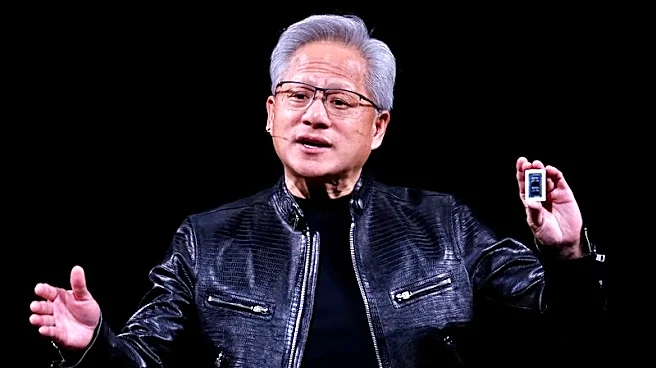
Jensen Huang, CEO of Nvidia, is set to announce a cooperation plan with South Korea's SK Group on Monday. This announcement comes amid an ongoing memory chip shortage that Huang predicts will continue
for several years. The meeting between Huang and SK Group Chairman Chey Tae-won took place in Seoul, where they discussed potential collaboration across various industries, including AI supercomputers, CPUs, new PCs, and robotics. Huang emphasized the prolonged nature of the chip shortage, attributing it to high demand and supply chain issues. A spokesperson for SK Hynix confirmed that both leaders plan to brief the media about their cooperation plan, which aims to address these challenges.
Why It's Important?
The cooperation between Nvidia and SK Group is significant as it addresses the global memory chip shortage, which has impacted numerous industries reliant on semiconductor technology. The shortage has led to production delays and increased costs for manufacturers and consumers alike. By collaborating, Nvidia and SK Group aim to mitigate these issues, potentially stabilizing supply chains and reducing the economic impact. This partnership could also accelerate advancements in technology sectors such as AI and robotics, fostering innovation and competitiveness in the global market. Stakeholders in the tech industry, including manufacturers and consumers, stand to benefit from improved supply chain resilience and technological advancements.
What's Next?
The announcement of the cooperation plan is expected to provide more details on how Nvidia and SK Group will address the chip shortage. Industry observers will be keen to see the specific strategies and technologies that will be employed to enhance supply chain efficiency and meet the high demand for semiconductors. The collaboration may also prompt other companies in the tech industry to form similar alliances, further strengthening the global semiconductor supply chain. Additionally, the outcome of this partnership could influence future policy decisions regarding technology and trade, as governments seek to support domestic industries and reduce reliance on foreign suppliers.