

What's Happening?
Fervo Energy has successfully secured $421 million in non-recourse debt financing for the first phase of its Cape Station geothermal project in Utah. This financing marks a significant transition from early-stage funding to a long-term project capital
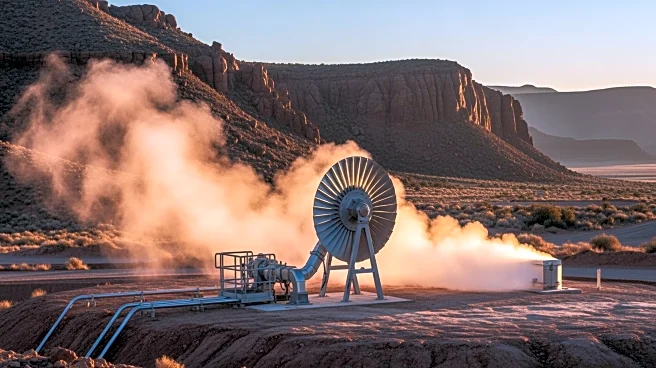
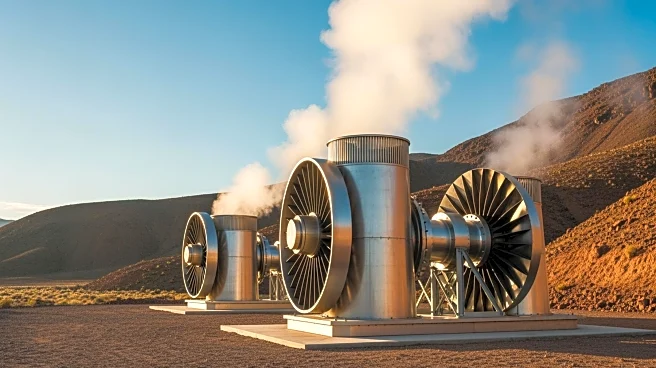
structure, underscoring the bankability of enhanced geothermal systems (EGS) as a utility-scale infrastructure asset. The Cape Station project is designed to meet the increasing power demand from data centers, artificial intelligence, and industrial manufacturing. Located in Beaver County, Utah, the project is expected to deliver its first power to the grid this year, with an initial operating capacity of 100 MW, scaling up to 500 MW. The project is fully contracted through power purchase agreements with Southern California Edison, Shell Energy, and community choice aggregators.
Why It's Important?
The successful financing of the Cape Station project highlights the growing viability of geothermal energy as a key component of the U.S. energy infrastructure. As demand for clean and reliable power sources increases, projects like Cape Station are crucial in diversifying the energy mix and reducing reliance on fossil fuels. The use of proven oil and gas technology, combined with AI-enabled drilling, positions EGS as a competitive and sustainable energy solution. This development not only supports energy security but also aligns with broader environmental goals by providing a stable and clean energy source. The project's success could pave the way for further investments in geothermal energy, contributing to the U.S.'s transition to a more sustainable energy future.
What's Next?
As Cape Station begins delivering power, it will serve as a model for future geothermal projects, potentially attracting more investment into the sector. The project's success could encourage other energy companies to explore similar ventures, further integrating geothermal energy into the national grid. Additionally, the project's progress will be closely monitored by stakeholders in the energy sector, including policymakers and environmental groups, as it could influence future energy policies and investment strategies. The continued development and expansion of Cape Station will be critical in demonstrating the scalability and reliability of geothermal energy as a mainstream power source.