







What's Happening?
Prosecutors investigating Tiger Woods' crash and subsequent arrest on suspicion of driving under the influence have been granted access to his prescription records. The decision was made during a brief hearing in Martin County circuit court, where Judge
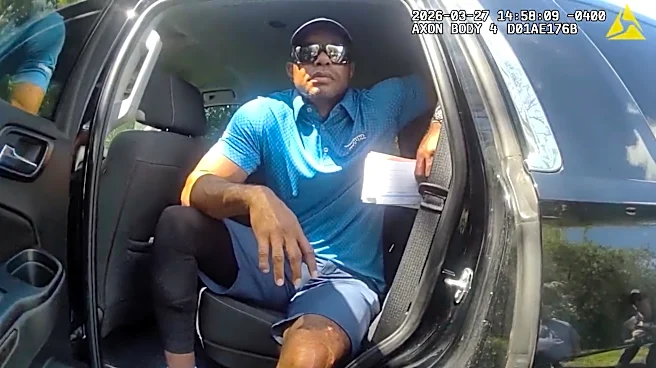
Darren Steele approved the agreement between Woods' attorney, Doug Duncan, and the prosecution team. The access is limited to records from January 1 through March, with restrictions on viewing privileged medical information. The records will be available to prosecution attorneys, law enforcement officers, state experts, and Woods' defense team, but will not be released to the public. The incident report from the crash indicates Woods was driving at excessive speeds on a residential road in Jupiter Island, Florida, resulting in his Land Rover rolling over. Although the vehicle sustained significant damage, Woods avoided major injuries. He was visibly impaired at the scene and had two pain pills in his pocket, according to police.
Why It's Important?
The access to Tiger Woods' prescription records is a significant development in the investigation of his DUI case. It allows prosecutors to examine the details of his medication usage, which could be crucial in understanding the circumstances leading to the crash. This case highlights the ongoing scrutiny of high-profile individuals and the legal processes involved in DUI investigations. The outcome could impact Woods' public image and legal standing, as well as set precedents for similar cases involving prescription medication and driving under the influence. The decision to limit public access to the records underscores the balance between privacy and legal transparency in such cases.
What's Next?
The next steps in the case will likely involve a detailed analysis of Woods' prescription records by the prosecution. This could lead to further legal actions depending on the findings regarding his medication usage. Woods' defense team may also prepare to counter any claims made by the prosecution based on these records. The case may attract public and media attention, influencing public opinion and potentially affecting Woods' career and endorsements. Legal experts and advocacy groups may weigh in on the implications of prescription medication in DUI cases, possibly prompting discussions on policy changes.