





What's Happening?
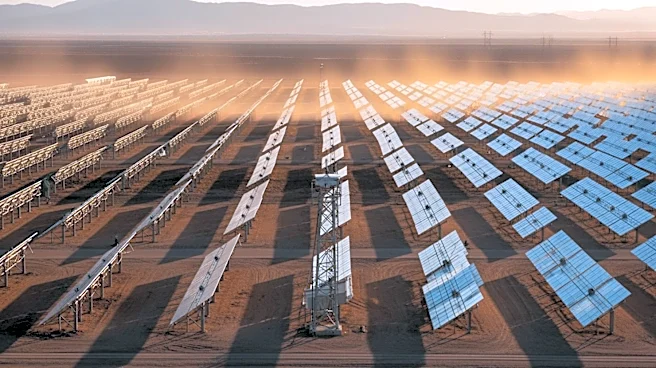
Two major California electric utilities, Pacific Gas & Electric and Southern California Edison, are attempting to exit long-term contracts with the Ivanpah solar power project. This utility-scale solar tower project, which began operations in 2014, has
consistently delivered only 70-80% of its projected annual energy output. The utilities, along with Google, have cited the project's underperformance and high operational costs as reasons for their decision to terminate the contracts, originally set to end in 2039. However, the California Public Utilities Commission (CPUC) has rejected these termination proposals, emphasizing the importance of maintaining existing clean energy sources amid rising electricity demand. The CPUC also highlighted the significant financial investments in transmission infrastructure that would be lost if the contracts were terminated. Additionally, recent federal policy changes have created a challenging environment for new renewable projects, further complicating the situation.
Why It's Important?
The decision by the CPUC to keep the Ivanpah project operational underscores the critical role of renewable energy in California's energy strategy, especially as the state aims to achieve 60% renewable energy by 2030. The situation highlights the challenges faced by early renewable projects in adapting to rapidly changing market conditions, where flexibility and storage capacity have become crucial. The outcome of this dispute could influence future investments in renewable energy infrastructure, as well as the strategies employed by utilities and technology partners like Google. The case also reflects broader national and global trends in renewable energy, where the integration of storage solutions is increasingly seen as essential for economic viability and grid stability.
What's Next?
The CPUC's decision to reject the termination of contracts suggests that stakeholders will need to explore alternative solutions to improve the economic performance of the Ivanpah project. One potential avenue is retrofitting the plant with molten salt storage technology, which could enhance its dispatchability and profitability. This approach has been successfully implemented in other concentrated solar power projects worldwide, particularly in China. If pursued, such a retrofit could serve as a model for other underperforming renewable projects. Additionally, the ongoing discussions and potential technological upgrades at Ivanpah could set precedents for regulatory and market responses to similar challenges in the renewable energy sector.
Beyond the Headlines
The Ivanpah case highlights the complexities of transitioning to a renewable energy future, where technological innovation must keep pace with market demands and regulatory frameworks. The project's challenges also raise questions about the sustainability of early renewable energy investments and the need for continuous adaptation to evolving energy landscapes. Furthermore, the involvement of major tech companies like Google in renewable energy projects underscores the growing intersection between technology and energy sectors, which could drive future innovations and collaborations. The situation at Ivanpah may also prompt a reevaluation of policy incentives and support mechanisms for renewable energy projects, ensuring they are aligned with current and future market realities.