




What's Happening?
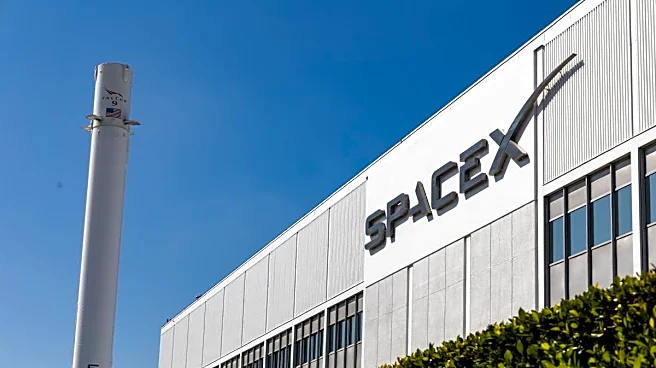
SpaceX is preparing for what could be one of the largest IPOs in Wall Street history, with a potential valuation of at least $1.8 trillion. The company, led by Elon Musk, has ambitious plans that include reusable rockets, Starlink broadband, and Mars
colonization. However, Larry McDonald, a former Lehman Brothers trader, has raised concerns about the valuation, comparing it to the dot-com bubble peak of 2000. He warns that investors might be overestimating future earnings, similar to what happened with Amazon during the dot-com crash. McDonald also highlights the risks of passive investing, as index funds might be forced to buy large amounts of SpaceX stock, potentially distorting the market.
Why It's Important?
The SpaceX IPO is significant as it could redefine the landscape of the stock market, especially in the context of AI-driven investments. The potential overvaluation of SpaceX shares could lead to financial instability, reminiscent of past market bubbles. This situation poses risks to passive investors, particularly those with retirement accounts, as they might be compelled to invest in overvalued stocks. The IPO also reflects the broader trend of AI companies dominating market benchmarks, which could lead to increased volatility and risk exposure for investors.
What's Next?
As SpaceX moves closer to its IPO, market participants will be closely watching for any adjustments in valuation targets and the company's performance. The IPO could trigger changes in major stock indexes, affecting passive investment strategies. Additionally, the market's reaction to SpaceX's valuation will be a key indicator of investor sentiment towards AI and tech-driven companies. Stakeholders, including financial analysts and institutional investors, will likely continue to debate the sustainability of current valuations and the potential impact on the broader economy.