








What's Happening?
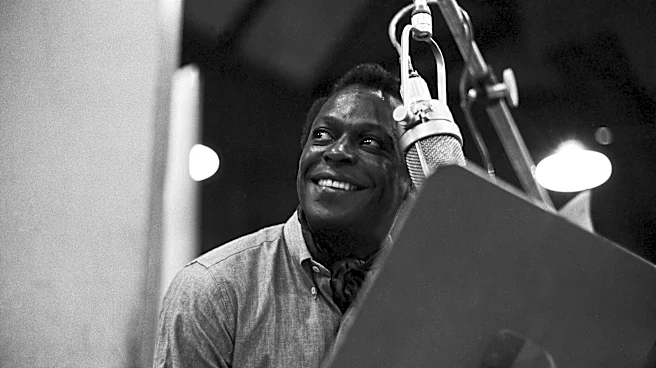
Miles Davis, the legendary jazz musician, is being celebrated as he would have turned 100 this year. Known for his influential work in jazz, Davis is remembered for his masterpieces like 'Kind of Blue' and his role in shaping various jazz movements, including
bebop, cool jazz, and jazz fusion. His legacy is being honored through events such as the Jazz at Lincoln Center's centennial tribute. However, Davis' legacy is also marked by controversy due to his history of violence against women, which he openly discussed in his autobiography. This duality in his legacy prompts discussions about how to reconcile his artistic genius with his personal failings.
Why It's Important?
Miles Davis' centennial is a moment to reflect on his profound impact on American music and culture. His contributions to jazz have left an indelible mark, influencing countless musicians and shaping the genre's evolution. However, the celebration of his legacy also brings to light the complexities of honoring artists with troubled personal histories. This raises broader questions about how society should acknowledge the achievements of individuals who have also caused harm. The discussions surrounding Davis' legacy highlight the ongoing challenge of balancing appreciation for artistic contributions with accountability for personal actions.
Beyond the Headlines
The celebration of Miles Davis' centennial underscores the enduring influence of jazz as a cultural force and its ability to transcend generations. It also prompts a deeper examination of how society remembers and honors historical figures with complex legacies. The conversations about Davis' life and work reflect broader societal issues related to gender, race, and the responsibilities of public figures. As the music community and fans celebrate his contributions, there is an opportunity to engage in meaningful dialogue about the lessons that can be learned from his life and how they can inform future generations.