



What's Happening?
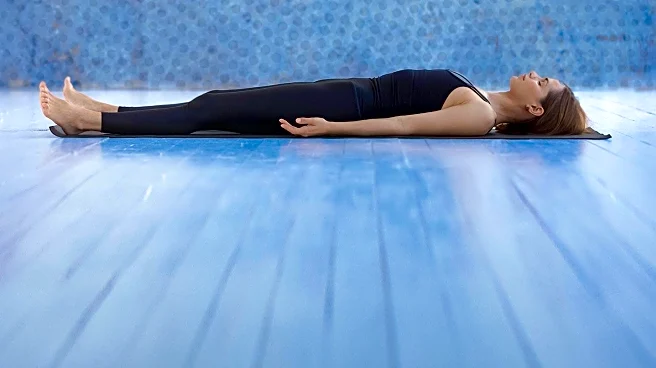
Recent research from Harbin Sport University in China has identified high-intensity yoga as the most effective exercise for improving sleep quality. The study, a meta-analysis of 30 randomized controlled trials, involved over 2,500 participants with sleep disturbances.
It found that practicing high-intensity yoga for less than 30 minutes, twice a week, significantly improved sleep quality. This form of exercise outperformed others such as walking, resistance training, and traditional Chinese exercises like qi gong and tai chi. The findings, published in 2025, contrast with a 2023 meta-analysis that favored aerobic exercise for sleep improvement. The study suggests that yoga's ability to regulate breathing and activate the parasympathetic nervous system may contribute to its effectiveness in promoting deeper sleep.
Why It's Important?
The study's findings highlight the potential of yoga as a non-pharmacological intervention for sleep disturbances, which affect a significant portion of the population. Improved sleep quality can lead to better overall health, increased productivity, and enhanced quality of life. The research suggests that incorporating yoga into daily routines could be a cost-effective and accessible way to address sleep issues. This could reduce reliance on sleep medications, which often come with side effects. The study also underscores the need for further research to explore the long-term benefits of yoga and other exercises on sleep quality.
What's Next?
Further high-quality research is needed to confirm these findings and explore the mechanisms by which yoga improves sleep. Future studies could investigate the impact of different yoga styles and intensities on sleep quality. Additionally, there is potential for developing targeted yoga programs for individuals with specific sleep disorders. As awareness of yoga's benefits grows, healthcare providers may increasingly recommend it as part of a holistic approach to managing sleep disturbances.