

What's Happening?
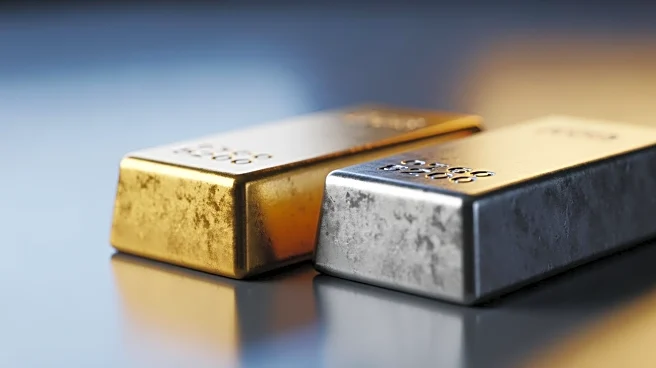
Gold prices have experienced a significant drop, falling by $102 to $5066, marking a 2% decline. This downturn follows a brief spike at the start of the trading day, where gold reached $5196. The decline in gold prices is occurring alongside a broader
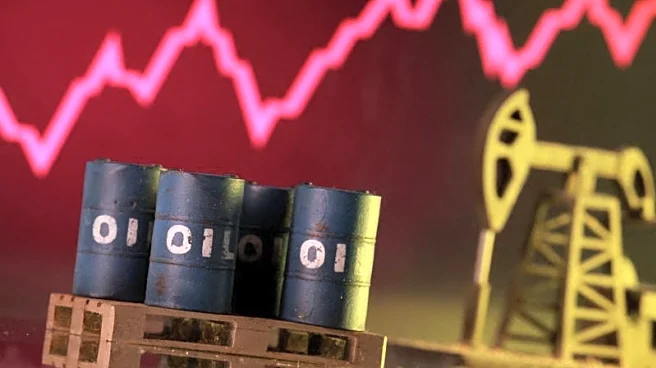
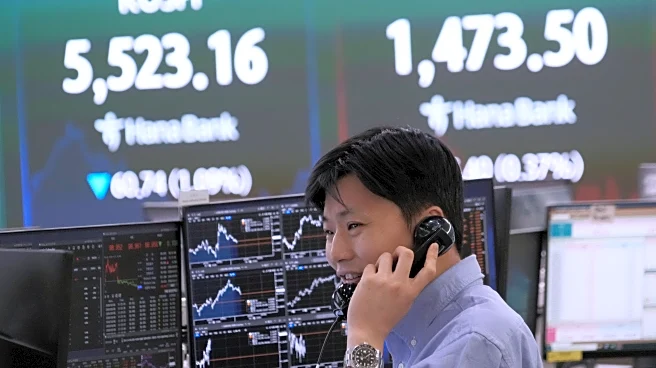
sell-off in global markets, driven by a sharp increase in oil prices. West Texas Intermediate (WTI) crude oil has surged by $14.75, reaching $107.41 per barrel. The current market conditions are characterized by heightened volatility and concerns over a potential recession due to escalating oil prices. Historically, gold is seen as a safe haven during economic uncertainty, but the current market turmoil has led traders to reduce risk, impacting gold's appeal. This trend mirrors past market behaviors, such as during the peak of the COVID-19 pandemic, when gold initially fell before embarking on a record run.
Why It's Important?
The drop in gold prices amidst rising oil costs and market volatility highlights the complex dynamics of global financial markets. Gold is traditionally viewed as a hedge against inflation and economic instability. However, the current sell-off suggests that traders are prioritizing liquidity and risk reduction over traditional safe-haven assets. This shift could have significant implications for investors and financial markets, as it indicates a potential reevaluation of risk management strategies. The rising oil prices, contributing to inflationary pressures, further complicate the economic outlook, potentially impacting consumer spending and economic growth. The situation underscores the interconnectedness of commodity markets and their influence on broader economic conditions.
What's Next?
As markets continue to react to rising oil prices and economic uncertainty, investors and traders will likely monitor central bank policies and geopolitical developments closely. Any changes in interest rates or fiscal policies could influence market sentiment and asset valuations. Additionally, the ongoing volatility may prompt a reassessment of investment strategies, with a potential shift towards more stable or alternative assets. The response of major economies to inflationary pressures and market instability will be crucial in shaping future market trends.
Beyond the Headlines
The current market dynamics raise questions about the long-term role of gold as a safe-haven asset. The interplay between inflation, oil prices, and market volatility may lead to a reevaluation of traditional investment paradigms. Furthermore, the situation highlights the challenges faced by policymakers in balancing economic growth with inflation control. The potential for a recession due to high oil prices could prompt discussions on energy policy and the need for sustainable alternatives to mitigate future economic shocks.