






What's Happening?
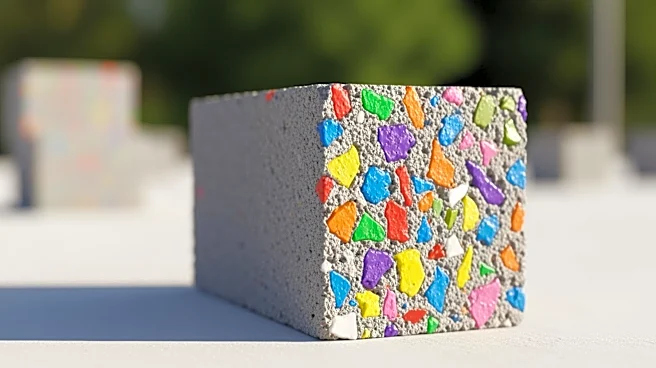
Recent research has explored the use of recycled plastic in concrete to improve its strength and sustainability. The study, published in Scientific Reports, focuses on incorporating extruded plastic sack (EPS) waste as a partial aggregate replacement
in concrete. This approach aims to promote a circular economy by reducing the environmental impact of concrete production, which traditionally involves significant natural resource extraction and pollution. The research employed a dual-mitigation strategy using microsilica and waste polypropylene (PP) fibers to address the mechanical deficiencies of smooth-surfaced plastics. The study found that replacing 5% of fine aggregate with plastic waste can enhance the tensile and compressive strengths of concrete blocks. However, higher replacement levels led to reduced mechanical performance due to weak interfacial transition zones (ITZ). The combination of microsilica and PP fibers was effective in mitigating these effects, transforming the failure mode from brittle to ductile and improving energy absorption.
Why It's Important?
The integration of recycled plastic into concrete has significant implications for the construction industry, which is a major contributor to environmental pollution and resource depletion. By using waste materials as additives and aggregate replacements, the industry can reduce its carbon footprint and reliance on natural resources. This approach not only addresses the issue of plastic waste but also enhances the mechanical properties of concrete, making it more suitable for sustainable building applications. The study's findings suggest that the construction sector can shift towards a circular economy model, conserving natural resources and reducing landfill waste. This could lead to cost savings and a reduction in the embodied carbon associated with conventional concrete production, aligning with global efforts to combat climate change.
What's Next?
The research indicates potential for further exploration into the use of different types of plastic waste in concrete. Future studies could focus on optimizing the mix design to maximize the benefits of recycled materials while minimizing any negative impacts on concrete performance. Additionally, the construction industry may consider adopting these sustainable practices on a larger scale, potentially influencing building codes and standards. Collaboration between researchers, industry stakeholders, and policymakers will be crucial in advancing these innovations and integrating them into mainstream construction practices.
Beyond the Headlines
The use of recycled plastic in concrete not only addresses environmental concerns but also presents ethical and economic dimensions. By reducing the demand for virgin materials, this approach supports sustainable development goals and promotes responsible consumption. It also opens up new opportunities for the recycling industry, potentially creating jobs and stimulating economic growth. Moreover, the successful implementation of these practices could serve as a model for other industries seeking to incorporate sustainable materials into their processes.