






What's Happening?
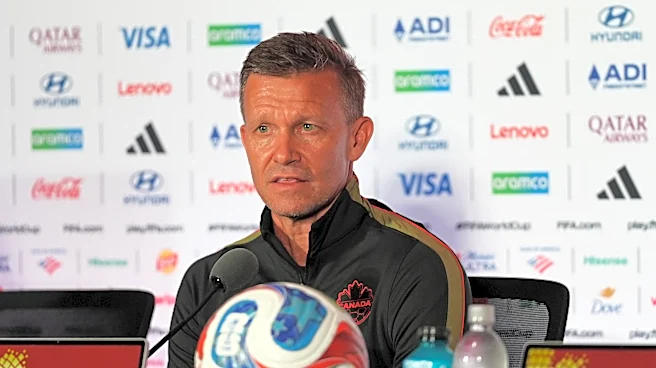
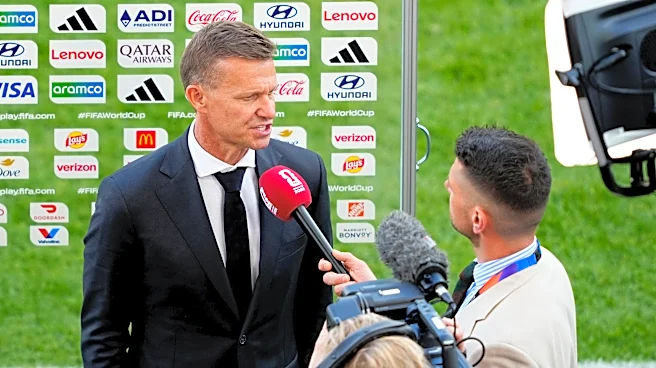
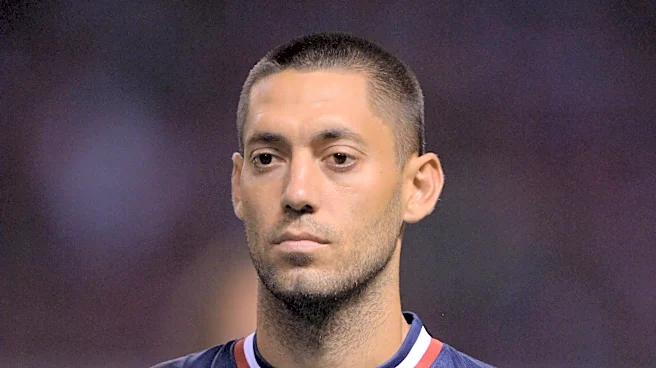
Clint Dempsey, a prominent figure in U.S. soccer, has publicly criticized Jesse Marsch, former assistant coach of the U.S. national team, for his comments regarding players' engagement with the national anthem. During a Fox pregame show, Dempsey expressed
his disapproval of Marsch's remarks, which suggested that American players needed encouragement to sing the anthem. Dempsey, who has a storied history with the national team, emphasized his own approach of placing his hand over his heart during the anthem, rather than singing. Marsch, now the head coach of the Canadian national team, had compared the enthusiasm of Canadian players with their American counterparts, noting that Canadian players sing the anthem with pride. Dempsey's comments highlight a broader discussion about national pride and representation in sports.
Why It's Important?
This exchange between Dempsey and Marsch underscores ongoing discussions about national identity and patriotism in sports. For U.S. soccer, which is striving to build a strong international presence, such debates can influence team dynamics and public perception. Dempsey's defense of his and his teammates' patriotism may resonate with fans who value traditional expressions of national pride. Conversely, Marsch's comments could spark introspection within the U.S. soccer community about how players express their national identity. This incident also reflects broader societal conversations about patriotism and how it is demonstrated, potentially affecting how athletes are perceived by the public and their peers.
What's Next?
The dialogue initiated by Dempsey's comments may lead to further discussions within U.S. soccer about the role of national symbols and rituals in sports. It could prompt the U.S. Soccer Federation to address how players engage with the anthem and other national symbols. Additionally, Marsch's position as a coach for a rival national team adds a layer of complexity, as his comments might influence the competitive dynamic between the U.S. and Canada. The U.S. team may also consider how to foster a sense of unity and pride that aligns with diverse expressions of patriotism among its players.