
What's Happening?
Utilities across the United States are increasingly adopting advanced weather forecasting models to better manage risks associated with wildfires and severe weather events. These models, which offer higher
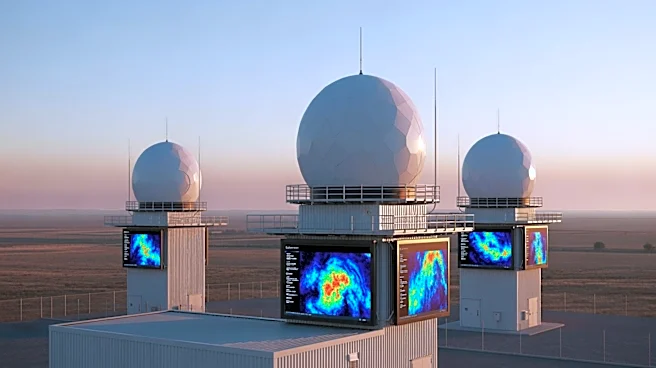
spatial resolution and more frequent updates than traditional public forecasts, are becoming essential tools for utility companies. For instance, CenterPoint Energy utilized a sub-kilometer model from Climavision to accurately predict severe thunderstorms in Houston, allowing them to pre-deploy crews and minimize outages. This shift towards advanced forecasting is driven by the need to make informed decisions about public safety power shutoffs and crew mobilization, especially as fire-weather risks expand beyond traditional areas like California to regions such as the Carolinas, Tennessee, and the central U.S.
Why It's Important?
The adoption of advanced weather forecasting models is crucial for utility companies as they face increasing regulatory scrutiny and the need to ensure public safety. These models provide utilities with the ability to make proactive decisions, reducing the impact of severe weather events on infrastructure and communities. By improving the accuracy and timeliness of forecasts, utilities can better manage resources, minimize outages, and enhance their ability to defend operational decisions in regulatory and legal contexts. The expansion of fire-weather risks to new regions underscores the importance of these tools in adapting to changing environmental conditions and protecting both assets and customers.
What's Next?
As utilities continue to integrate advanced forecasting models into their operations, they will likely focus on further improving the accuracy and resolution of these tools. This includes addressing current gaps such as terrain-driven wind behavior and extending forecast horizons beyond the current five-day limit. Additionally, utilities may explore the use of AI and machine learning to enhance model performance while ensuring transparency and accountability in decision-making processes. The ongoing development of these technologies will play a critical role in shaping the future of utility risk management and grid modernization efforts.
Beyond the Headlines
The shift towards advanced weather forecasting models highlights broader trends in utility management and environmental adaptation. As climate change continues to alter weather patterns, utilities must not only invest in forecasting technologies but also in infrastructure resilience and community engagement. The integration of these models into regulatory frameworks and operational strategies will be key to navigating the complex challenges posed by increasingly frequent and severe weather events. This evolution reflects a growing recognition of the interconnectedness of environmental, technological, and regulatory factors in ensuring sustainable and reliable energy systems.