


What's Happening?
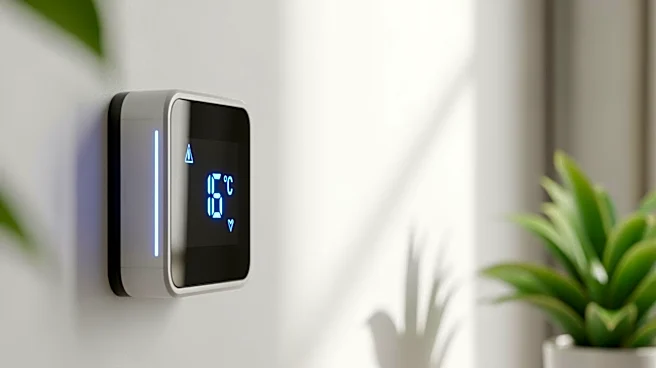
As energy bills continue to rise, particularly during extreme weather months, experts recommend specific thermostat settings to optimize comfort and cost savings. In winter, setting the thermostat to 68 degrees Fahrenheit when home and 60 to 65 degrees when away
or asleep can help reduce heating costs. In summer, maintaining a setting of 75 to 78 degrees when home and 80 degrees when away or asleep is advised. The Department of Energy suggests that adjusting the thermostat by 7 to 10 degrees for eight hours a day can save up to 10% annually on heating and cooling costs. Proper insulation and regular HVAC maintenance are also recommended to enhance energy efficiency.
Why It's Important?
With rising energy costs, finding ways to reduce consumption without sacrificing comfort is crucial for many households. Implementing optimal thermostat settings can lead to significant savings on utility bills, making it an accessible strategy for energy conservation. Additionally, improving home insulation and maintaining HVAC systems can further enhance efficiency, reducing the overall energy demand. These measures not only benefit individual consumers but also contribute to broader efforts to manage energy resources more sustainably.
What's Next?
Homeowners may increasingly adopt smart thermostats and other energy-efficient technologies to better manage their energy use. As awareness of energy-saving practices grows, there could be a shift towards more sustainable living habits. Utility companies and policymakers might also introduce incentives or programs to encourage energy efficiency and support consumers in reducing their energy consumption.