
What's Happening?
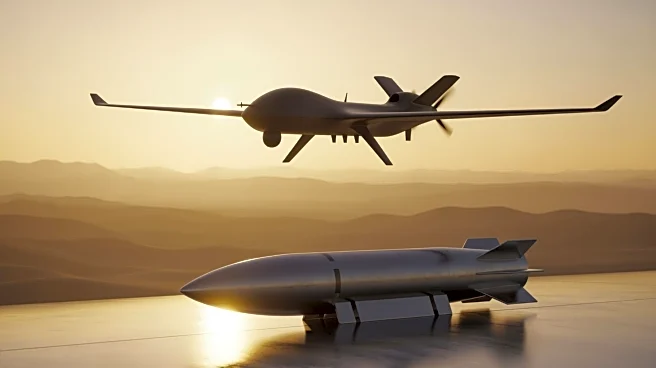
General Atomics Aeronautical Systems (GA-ASI) is exploring the integration of long-range standoff weapons on its MQ-9B SkyGuardian unmanned aerial system. Traditionally equipped with short-range laser-guided
munitions for close air support, the SkyGuardian is now being considered for roles in maritime surveillance and anti-submarine warfare. The company aims to expand its capabilities to include long-range deep-strike missions, potentially carrying weapons like the Lockheed Martin Joint Air-to-Surface Standoff Missile and the Long Range Anti-Ship Missile. Although no test flights have been conducted with these weapons, GA-ASI plans to demonstrate this capability at the upcoming Air and Space Forces Association Warfare Symposium. The MQ-9B has already garnered interest in the Middle East, with Qatar being the only regional customer so far, but there is significant interest from Saudi Arabia and the United Arab Emirates.
Why It's Important?
The development of standoff weapons capability for the MQ-9 SkyGuardian represents a significant enhancement in the operational flexibility and strategic value of unmanned aerial systems. By equipping the SkyGuardian with long-range strike capabilities, General Atomics is positioning the aircraft to meet evolving defense needs, particularly in regions with complex security dynamics like the Middle East. This move could strengthen U.S. defense exports and partnerships, as countries in the region seek advanced military technologies to bolster their defense capabilities. Additionally, the initiative aligns with U.S. defense strategies that emphasize rapid deployment and adaptability in military operations, potentially influencing future procurement and development strategies within the defense sector.
What's Next?
General Atomics plans to further detail its standoff weapons integration strategy at the Air and Space Forces Association Warfare Symposium. The company is also looking to replicate its successful business relationships in the UAE with similar partnerships in Saudi Arabia. This includes potential co-production agreements and collaborations with local defense companies. As interest in the MQ-9B grows, particularly in the Middle East, General Atomics may pursue additional contracts and partnerships to expand its market presence. The company's proactive approach to financing production lines before securing contracts could accelerate the deployment of these enhanced capabilities, aligning with broader U.S. defense objectives.