



What's Happening?
The mushroom farming industry is experiencing significant growth, driven by increasing consumer preference for nutrient-dense and plant-based foods. According to a report, the global mushroom farming market is projected to grow from USD 76.0 billion in 2025
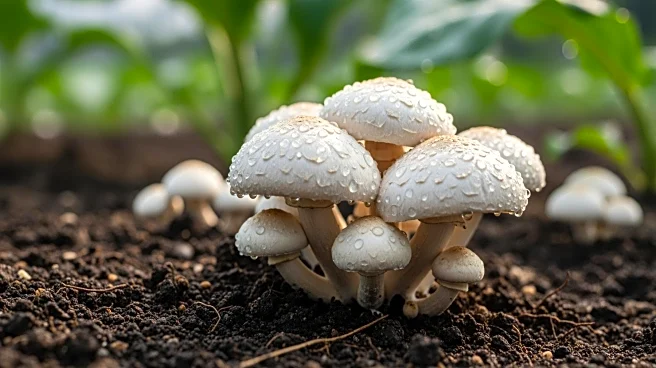
to USD 123.7 billion by 2034, with a compound annual growth rate (CAGR) of 5.6% from 2026 to 2034. This growth is attributed to the rising adoption of vegetarian and vegan diets, as well as the expanding use of mushrooms in food processing and nutraceutical applications. Mushrooms are cultivated using organic substrates under controlled environmental conditions, making them a sustainable and high-value food source. The industry is also benefiting from technological advancements in climate-controlled cultivation and improved spawn quality, which enhance productivity and reduce contamination risks.
Why It's Important?
The growth of the mushroom farming industry is significant for several reasons. It aligns with global sustainability trends by offering a low-footprint agricultural model that requires less land and water compared to traditional livestock-based protein production. This makes mushrooms an attractive option for health-conscious consumers and those seeking sustainable food sources. The industry's expansion also presents opportunities for agri-entrepreneurs and investors, as the demand for plant-based foods continues to rise. Additionally, the use of mushrooms in nutraceuticals and functional foods is increasing, driven by consumer interest in bioactive compounds and adaptogenic ingredients. This positions the mushroom farming industry as a key player in the global food and agriculture value chain.
What's Next?
As the mushroom farming industry continues to grow, it is expected to see further advancements in cultivation technologies and increased investment in sustainable farming practices. The industry may also experience a rise in export opportunities, particularly for dried, frozen, and processed mushroom products, as international demand remains strong. Additionally, the expansion of urban and sustainable mushroom farming models could further reduce food miles and support low-carbon supply chains. Stakeholders in the industry, including food manufacturers, hospitality buyers, and nutraceutical brands, are likely to continue seeking innovative ways to incorporate mushrooms into their products, capitalizing on their nutritional and functional benefits.
Beyond the Headlines
The mushroom farming industry's growth highlights broader shifts in consumer behavior towards plant-based diets and sustainable food sources. This trend reflects a growing awareness of the environmental impact of traditional agriculture and a desire for healthier, more sustainable food options. The industry's focus on using agricultural waste as substrate also aligns with circular economy principles, reducing environmental impact and promoting resource efficiency. As the industry evolves, it may play a crucial role in addressing global food security challenges by providing a reliable and sustainable protein source.