
What's Happening?
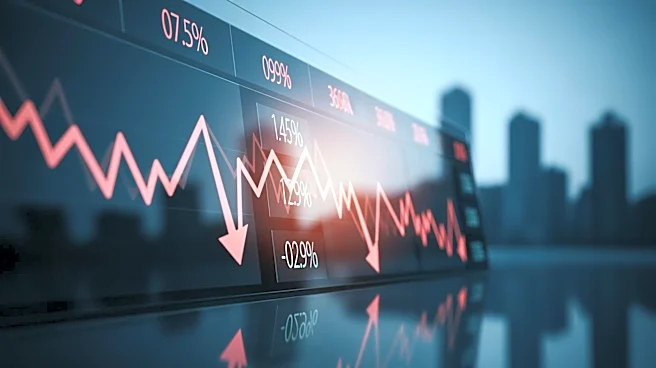
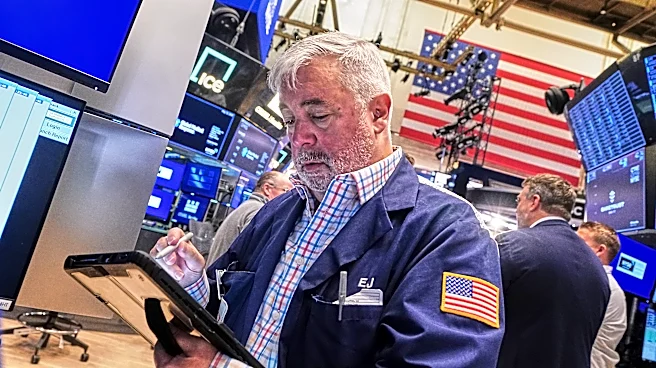
On May 15, 2026, U.S. stock markets experienced a significant downturn as global equities retreated from record highs. The Dow Jones Industrial Average fell by 537 points, or 1.1%, while the Nasdaq composite
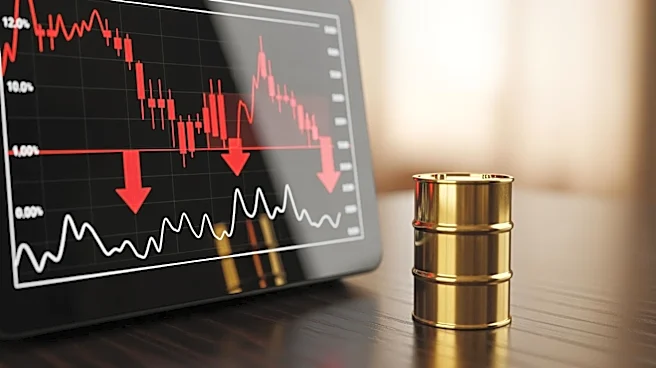
decreased by 1.5%. The S&P 500 also saw a decline of 1.2% from its all-time high. This drop was largely driven by a sharp fall in technology stocks, which had previously seen substantial gains. Notably, Nvidia's stock fell by 4.4%, and Micron Technology's stock dropped by 6.6%. The decline in stock prices was attributed to rising oil prices, which have exacerbated inflation concerns. The ongoing conflict with Iran has led to the closure of the Strait of Hormuz, impacting global oil supply and driving up prices. The bond market also reacted, with Treasury yields climbing, indicating increased borrowing costs.
Why It's Important?
The downturn in U.S. stock markets highlights the volatility and sensitivity of financial markets to geopolitical events and commodity price fluctuations. Rising oil prices and inflation concerns can have widespread economic implications, affecting consumer spending and corporate profits. Higher Treasury yields suggest increased borrowing costs, which could slow economic growth by making loans more expensive for businesses and consumers. The technology sector, which has been a significant driver of market gains, is particularly vulnerable to such fluctuations. The situation underscores the interconnectedness of global markets and the potential for geopolitical tensions to impact economic stability.
What's Next?
Investors and market analysts will be closely monitoring developments in the geopolitical landscape, particularly the situation with Iran and its impact on oil prices. The Federal Reserve's response to inflationary pressures will also be a key focus, as any changes in interest rates could further influence market dynamics. Companies may need to adjust their strategies to navigate the challenging economic environment, potentially impacting investment and hiring decisions. Additionally, consumer sentiment and spending patterns will be critical indicators of the broader economic impact.