





What's Happening?
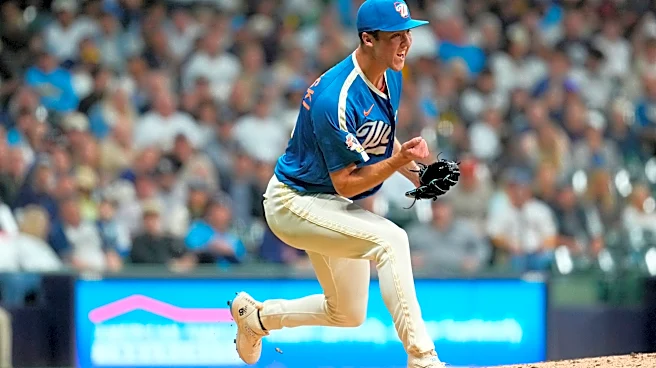
The Milwaukee Brewers have recently completed a successful sweep of the New York Yankees, bolstered by consecutive walk-off victories. This performance has positioned them as strong contenders in the National League. Despite their current success, there
is discussion about potential improvements, particularly through their minor league system. One of the key prospects under consideration is Cooper Pratt, who secured an eight-year, $50.5 million extension before making his Major League debut. Although Pratt's current performance in Triple-A is modest, with a .612 OPS, his defensive capabilities and potential as a Gold Glove defender make him a valuable asset. The Brewers currently have Joey Ortiz at shortstop, who, despite his defensive skills, has struggled offensively with a .443 OPS in 94 plate appearances. The team is contemplating Pratt's call-up, as they are not constrained by service time manipulation concerns.
Why It's Important?
The potential call-up of Cooper Pratt could significantly impact the Brewers' performance and strategy. Pratt's defensive prowess and potential to develop into a key player could enhance the team's infield strength. This move reflects the Brewers' commitment to leveraging their minor league talent to maintain competitiveness in the National League. The decision to invest heavily in Pratt before his Major League debut underscores the organization's confidence in his abilities and long-term potential. If successful, Pratt's integration into the team could set a precedent for how the Brewers manage and develop their prospects, potentially influencing other teams' strategies in player development and contract negotiations.
What's Next?
The Brewers will likely continue to monitor Pratt's performance in Triple-A and assess the team's needs as the season progresses. If Ortiz's offensive struggles persist, the pressure to promote Pratt may increase. The decision will also depend on the team's overall performance and injury status. Should Pratt be called up, it will be crucial for the Brewers to manage his transition carefully to maximize his development and contribution to the team. The move could also prompt reactions from other teams in the league, particularly those in the NL Central, as they adjust their strategies in response to the Brewers' roster changes.