






What's Happening?
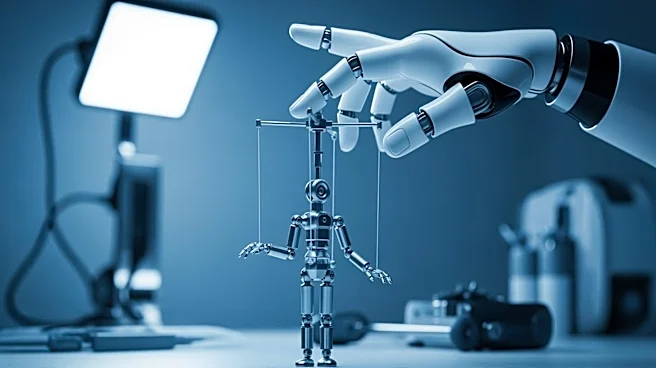
In Silicon Valley, a growing workforce of robot puppeteers is training humanoid robots to perform everyday tasks such as pouring coffee and folding laundry. This initiative is part of a broader effort by companies like Encord to prepare humanoid robots for deployment
in homes, offices, and factories. The training involves using hand and arm sensors to manipulate mechanical arms, teaching them to perform tasks with precision. Companies like Tesla and 1X Technologies are ramping up production of humanoid robots, with plans to release thousands of units into the market. The training data collected is crucial for the robots to learn human-like movements, which are not easily captured from internet data. This development is part of a larger trend in Silicon Valley, where significant investments are being made in robotics and artificial intelligence.
Why It's Important?
The integration of humanoid robots into everyday life has the potential to revolutionize industries by automating routine tasks, thereby increasing efficiency and reducing labor costs. This shift could significantly impact the job market, particularly in sectors reliant on manual labor. The ability of robots to perform tasks autonomously could lead to increased productivity and economic growth. However, it also raises concerns about job displacement and the need for new skills in the workforce. The success of these robots depends on their ability to perform tasks accurately and efficiently, which is why the training provided by robot puppeteers is critical. As the technology matures, it could lead to widespread adoption of robots in various sectors, transforming how businesses operate.
What's Next?
As companies continue to develop and refine humanoid robots, the focus will likely shift towards improving their capabilities and expanding their applications. This could involve enhancing their ability to perform more complex tasks and operate in diverse environments. The data collected from current training efforts will be used to improve robot performance and reliability. Additionally, as more robots enter the market, there will be a need for regulatory frameworks to ensure their safe and ethical use. The industry may also see increased collaboration between tech companies and educational institutions to address potential workforce disruptions and prepare workers for new roles in a robot-driven economy.