







What's Happening?
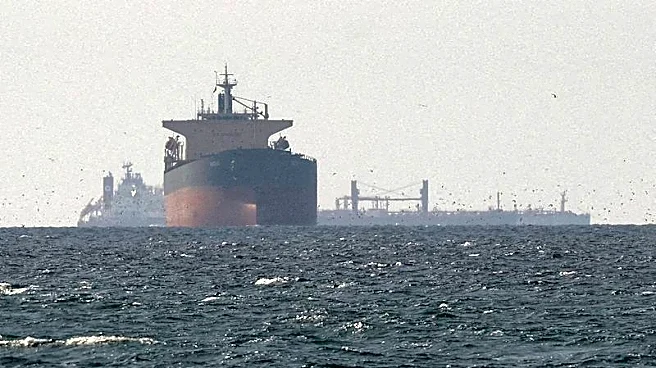
Gold prices surged to a near one-week high following a preliminary peace agreement between the United States and Iran. The deal, which aims to end the conflict and reopen the Strait of Hormuz, has led to a decrease in oil prices and eased concerns about
inflation and potential interest rate hikes by the U.S. Federal Reserve. Spot gold rose 2.7% to $4,334.48 per ounce, while U.S. gold futures for August delivery climbed 2.8% to $4,355.30. The agreement is set to be officially signed in Switzerland, as announced by Pakistani Prime Minister Shehbaz Sharif. The U.S. dollar also fell to a 10-day low, making gold more affordable for holders of other currencies.
Why It's Important?
The peace agreement between the U.S. and Iran has significant implications for global markets, particularly in terms of commodity prices and inflation expectations. The reduction in oil prices alleviates some inflationary pressures, which in turn affects the Federal Reserve's monetary policy decisions. Lower inflation expectations reduce the likelihood of interest rate hikes, making gold, a non-yielding asset, more attractive to investors. This development also impacts the geopolitical landscape, potentially stabilizing a region critical for global oil supply, which could have long-term economic benefits.
What's Next?
Investors are closely watching the Federal Reserve's upcoming policy meeting, the first under new Fed Chair Kevin Warsh, to gauge future interest rate decisions. The official signing of the peace deal is scheduled for later this week, which could further influence market dynamics. Additionally, the reopening of the Strait of Hormuz is expected to have a lasting impact on oil and commodity markets, potentially leading to more stable pricing and reduced volatility.