
What's Happening?
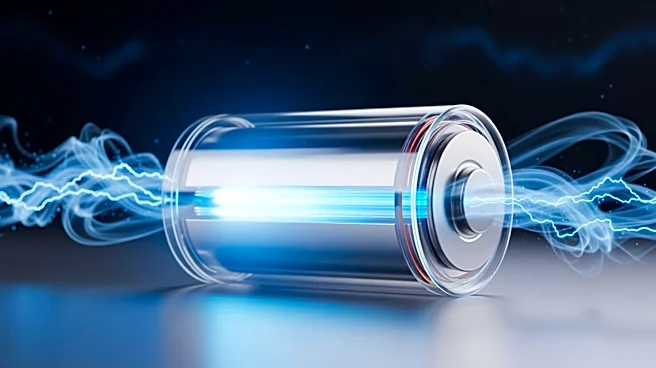
CATL, the world's largest battery manufacturer, is making significant strides in the development of lithium-air battery technology. This advancement is notable for its potential to achieve an energy density
of 12,000 Wh/kg, comparable to that of gasoline. The technology utilizes lithium metal as the anode and oxygen from the air as the cathode, significantly reducing weight and complexity. Recent prototypes have achieved an energy density of over 1,200 Wh/kg, which is four times greater than most current commercial batteries. The development of these batteries involves overcoming challenges such as sensitivity to moisture and carbon dioxide, as well as issues with catalyst stability and cycle life. Recent breakthroughs have included the creation of a four-electron chemical reaction pathway at room temperature, which enhances energy storage capabilities.
Why It's Important?
The development of lithium-air batteries by CATL could revolutionize the electric vehicle (EV) industry by providing a power source with energy density comparable to gasoline. This would potentially allow EVs to travel much longer distances on a single charge, making them more competitive with traditional gasoline-powered vehicles. The implications for the automotive industry are significant, as this technology could accelerate the transition to electric vehicles, reduce reliance on fossil fuels, and contribute to global efforts to combat climate change. Additionally, the advancements in battery technology could have broader applications in other sectors, such as aviation and shipping, further enhancing energy efficiency and sustainability.
What's Next?
CATL plans to continue its research and development efforts, focusing on solid-state batteries in the medium term and exploring the theoretical limits of lithium-air technology for the future. The company aims to overcome existing challenges and eventually bring these high-energy-density batteries to market. As the technology progresses, it is expected that other stakeholders in the energy and automotive industries will closely monitor and potentially invest in similar advancements. The success of lithium-air batteries could lead to increased competition and innovation in the battery manufacturing sector.