
What's Happening?
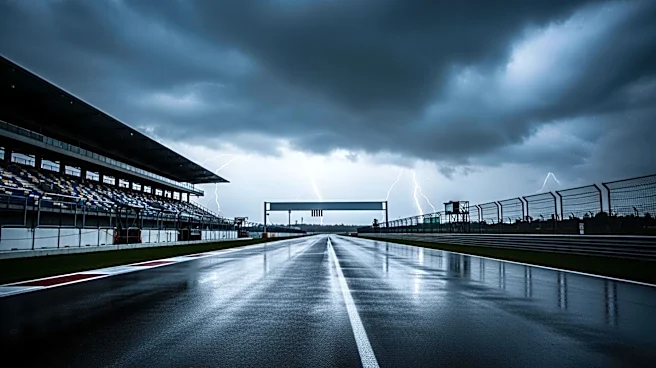
The Miami Grand Prix, scheduled for Sunday, is facing potential disruption due to forecasted heavy thunderstorms. The weather system, originating from the Rockies near Denver, Colorado, is expected to move
across the southern United States, impacting Alabama, Louisiana, and Mississippi before reaching Miami. The thunderstorms are predicted to hit Miami on Sunday morning, ahead of the 16:00 local time start of the 57-lap race. This weather pattern is expected to affect the eastern seaboard of the United States, passing over Cuba and the Bahamas before moving into the Atlantic Ocean. In 2025, a similar weather event delayed the Miami Sprint race, causing a red flag condition and a crash involving Charles Leclerc. Despite the forecast, other sessions in Miami, including practice and qualifying, are expected to remain dry with temperatures in the low to mid-30 degrees Celsius.
Why It's Important?
The potential disruption of the Miami Grand Prix due to thunderstorms could have significant implications for the event and its stakeholders. The race is a major event in the Formula 1 calendar, attracting global attention and significant economic activity to the Miami area. A delay or cancellation could impact local businesses, tourism, and the overall economic benefits associated with hosting such a high-profile event. Additionally, the safety of drivers and teams is paramount, and adverse weather conditions could pose risks during the race. The event's outcome could also affect team standings and driver performances in the 2026 F1 season, influencing strategies and decisions for future races.
What's Next?
If the thunderstorms materialize as forecasted, race organizers may need to implement contingency plans, including potential delays or adjustments to the race schedule. Teams and drivers will need to prepare for changing track conditions, which could influence tire strategies and race tactics. The weather's impact on the race could lead to discussions within the F1 community about scheduling and location considerations for future events. Stakeholders, including local authorities and businesses, will be closely monitoring the situation to mitigate any negative impacts on the event and the local economy.