






What's Happening?
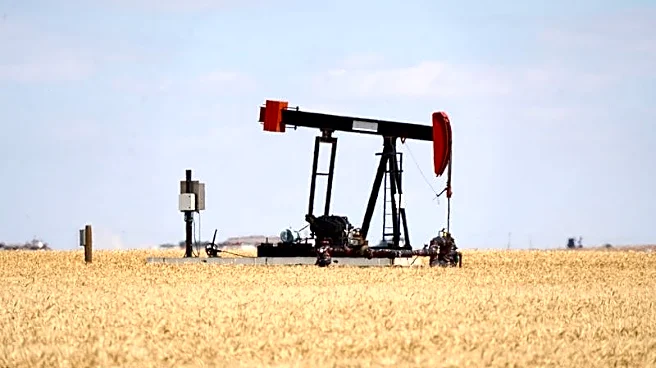
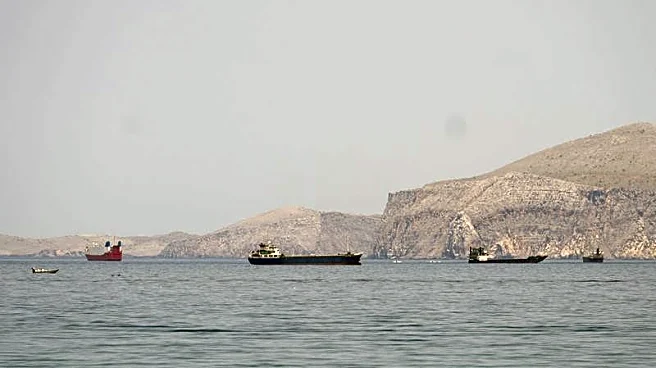
The ongoing conflict involving Iran has led to significant disruptions in the global oil supply, particularly with the closure of the Strait of Hormuz, which has removed 14 million barrels per day from the market. Despite this, oil prices have not risen
as expected, currently trading around $110 per barrel, which is lower than the anticipated $150. Analysts are puzzled by this anomaly, as historical supply disruptions have typically led to higher price spikes. The U.S. has released oil from strategic reserves, and the Trump administration has lifted sanctions on Russian and Iranian oil, temporarily increasing supply. However, U.S. crude inventories are depleting rapidly, with a recent unexpected drop of 6.2 million barrels, raising concerns about future supply shortages.
Why It's Important?
The situation is critical for the U.S. economy, as rising oil prices could exacerbate inflation and potentially lead to a recession. The U.S. has been somewhat insulated from global shortages due to strategic reserves, but these buffers are diminishing. The market's current stability is partly due to speculative trading, with traders betting on a quick resolution to the conflict. If the situation persists, the U.S. could face higher fuel prices, impacting consumers and industries reliant on oil. The geopolitical tensions also highlight vulnerabilities in global oil supply chains, emphasizing the need for diversified energy sources.
What's Next?
As U.S. oil inventories continue to decline, the market may face increased volatility. The potential for further price increases looms if the conflict does not resolve soon. The U.S. government may need to consider additional measures to stabilize the market, such as further releases from strategic reserves or diplomatic efforts to reopen the Strait of Hormuz. The global community will be watching closely for any shifts in U.S. foreign policy or military involvement that could influence the conflict's trajectory.