What's Happening?
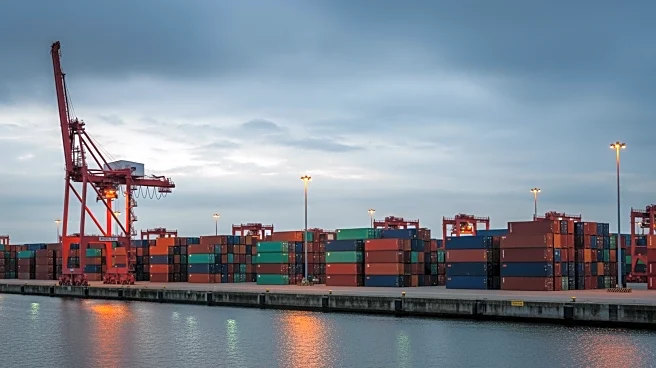
The global container ship order book has reached a record high, totaling over 1,350 ships with a combined capacity of 11.8 million TEU, according to Niels Rasmussen, Chief Shipping Analyst at BIMCO. Despite a 13% drop in global average container freight
rates in 2025 and concerns over increasing trade protectionism due to US import tariff hikes, global container volumes grew by 4.7% year-on-year. Shipowners have ordered a record 4.8 million TEU of new ship capacity, with 102 ships ordered in the first two months of 2026 alone. The order book for smaller ships has grown rapidly, although the largest ships dominate the order book, indicating a shift towards larger vessels replacing smaller ones in global services.
Why It's Important?
The expansion of the container ship order book reflects significant changes in the shipping industry, with potential implications for global trade dynamics. The increase in larger ships could lead to a restructuring of shipping routes and services, impacting liner operators' supply and demand management. The growth in ship capacity may also affect freight rates and shipping costs, influencing global trade flows and economic activities. The shift towards larger vessels could challenge smaller operators and alter the competitive landscape in the shipping industry.
What's Next?
As the order book continues to grow, the shipping industry may face challenges in balancing supply and demand. The delivery of 11.8 million TEU by 2029 could lead to an oversupply of shipping capacity, potentially affecting freight rates and profitability for liner operators. The industry may need to focus on recycling older ships to manage capacity and maintain market stability. Additionally, the shift towards larger vessels may require ports and infrastructure to adapt to accommodate these ships, influencing future investments and developments in the maritime sector.