
What's Happening?
HD Hyundai Heavy Industries has finalized a contract with the Swedish Maritime Authority for the construction of a new icebreaker, marking the South Korean company's entry into the international icebreaker market.
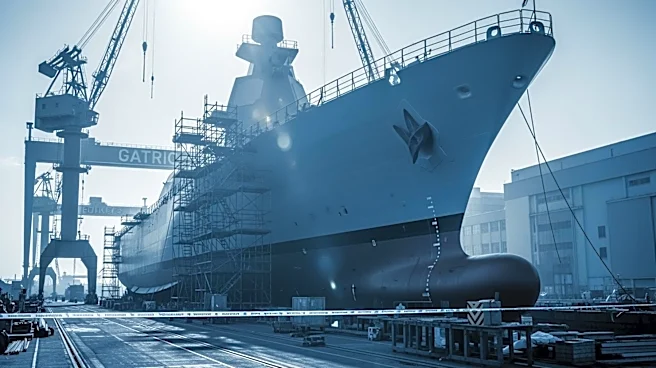
The contract, valued at $348.9 million, involves the construction of a Polar Class 4 icebreaker, capable of handling ice up to 1.2 meters thick. The vessel, set for delivery in 2029, will support operations in the Baltic Sea, a region that has faced increasingly challenging ice conditions. This project is part of Sweden's initiative to modernize its aging icebreaker fleet, which includes vessels built in the 1970s and 1980s. The new icebreaker will feature an electric propulsion system and future capabilities for methanol power. The contract was awarded after a competitive tender process, which included bids from Norway and Finland, and was upheld by Swedish courts following a legal challenge.
Why It's Important?
This contract represents a significant milestone for HD Hyundai as it seeks to expand its presence in the specialized vessel market. The deal aligns with the company's strategy to leverage its technological capabilities and business integration to enter new export markets. The icebreaker will play a crucial role in maintaining open shipping lanes in the Baltic Sea, which are vital for Sweden's economy. The project also highlights the growing demand for modern icebreaking vessels, driven by the need to address climate-related challenges in polar regions. Additionally, the contract is part of a broader trend of international collaboration in maritime infrastructure, as seen in the 2024 ICE Pact involving the United States, Canada, and Finland, which aims to invest $9 billion in icebreaker construction over the next decade.
What's Next?
The successful completion of this contract could position HD Hyundai as a key player in the global icebreaker market, potentially leading to further international contracts. The company is likely to continue pursuing opportunities under the ICE Pact, which could involve building additional icebreakers for North American and European markets. For Sweden, the new icebreaker will enhance its ability to keep northern ports operational year-round, reducing economic disruptions caused by ice blockages. The project also sets a precedent for future collaborations between South Korea and European countries in maritime technology and infrastructure development.