







What's Happening?
Omar Asali, chairman and CEO of Ranpak, is set to present at the Robotics Summit & Expo in Boston, focusing on the integration of physical AI in warehousing. The session will address the 'green dilemma' faced by warehouse managers who aim to meet sustainability
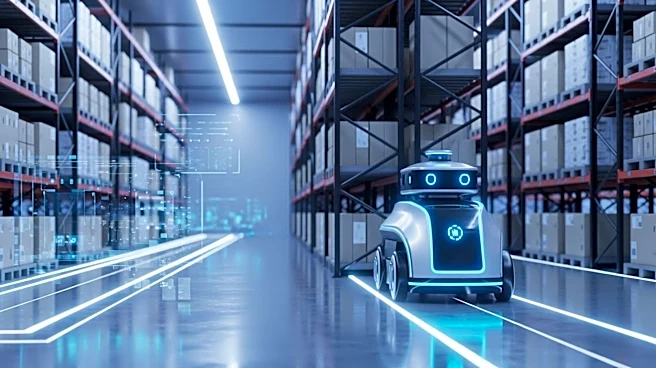
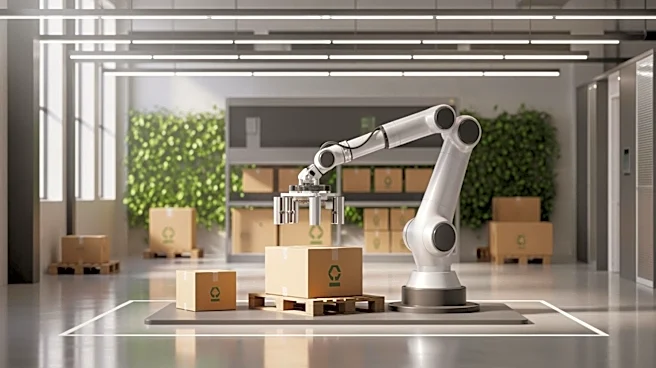
targets without compromising efficiency or budget. Asali will highlight how physical AI, which involves intelligent, sensor-driven systems, can optimize warehouse operations by understanding the physical characteristics of handled items. This approach not only enhances resource optimization in real-time but also aligns environmental goals with operational key performance indicators (KPIs). Asali will present data showing significant reductions in material usage and increases in throughput, demonstrating that sustainability can be profitable.
Why It's Important?
The integration of physical AI in warehousing represents a significant shift in logistics, offering a solution to the longstanding challenge of balancing sustainability with profitability. By reducing material waste and increasing operational efficiency, companies can achieve environmental goals while maintaining or even enhancing their bottom line. This development is crucial for industries under pressure to adopt greener practices without sacrificing economic performance. The session underscores the potential for technology to empower the workforce by automating repetitive tasks, allowing employees to focus on strategic roles. This human-centered approach to automation could redefine job roles in the logistics sector, promoting a more sustainable and efficient industry.
What's Next?
The session at the Robotics Summit & Expo is expected to provide a practical framework for companies looking to implement automation in a sustainable manner. Attendees will gain insights into quantifying the return on investment (ROI) of such technologies. As the logistics industry continues to evolve, the adoption of physical AI could become a standard practice, influencing future warehouse designs and operations. Stakeholders, including business leaders and policymakers, may need to consider the implications of these technologies on workforce dynamics and regulatory frameworks. The session could also spark further discussions on the role of AI in achieving broader sustainability goals across various sectors.