









What's Happening?
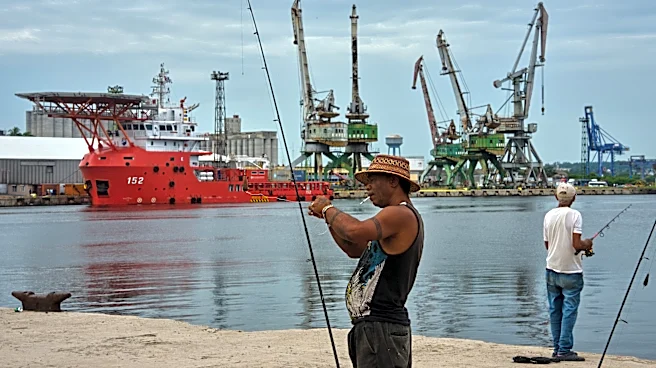
Andy Pages, a center fielder for the Los Angeles Dodgers, is experiencing personal challenges due to strained U.S.-Cuba relations. Living in the United States with his wife, Pages is separated from his family in Mantua, Cuba, due to economic sanctions
and diplomatic tensions imposed by the Trump administration. These restrictions prevent him from visiting his family or bringing them to the U.S. Despite earning $800,000 annually, Pages cannot use his income to bridge the physical gap between him and his family. The situation is exacerbated by the humanitarian crisis in Cuba, which includes fuel shortages and blackouts, further complicating communication with his family.
Why It's Important?
The situation highlights the broader impact of U.S.-Cuba relations on individuals, particularly those with familial ties to the island. For Pages and other Cuban players in Major League Baseball, these tensions create emotional and logistical challenges, affecting their personal lives and potentially their professional performance. The restrictions not only limit personal freedoms but also underscore the complex interplay between international politics and individual lives. This scenario reflects the broader implications of foreign policy decisions on immigrant communities in the U.S., emphasizing the need for diplomatic solutions that consider humanitarian aspects.
What's Next?
As U.S.-Cuba relations remain tense, individuals like Pages may continue to face difficulties in maintaining family connections. The situation could prompt calls for policy changes that allow for more personal freedoms and family reunification. Meanwhile, Pages and other affected players must navigate these challenges while focusing on their careers. The ongoing diplomatic tensions may also influence public opinion and policy discussions regarding U.S. foreign relations with Cuba.
Beyond the Headlines
The personal story of Andy Pages sheds light on the less visible consequences of international diplomacy. It raises ethical questions about the human cost of political decisions and the responsibilities of governments to consider the welfare of individuals affected by such policies. The narrative also highlights the resilience of immigrant communities and their ability to adapt to challenging circumstances while maintaining cultural and familial ties.