






What's Happening?
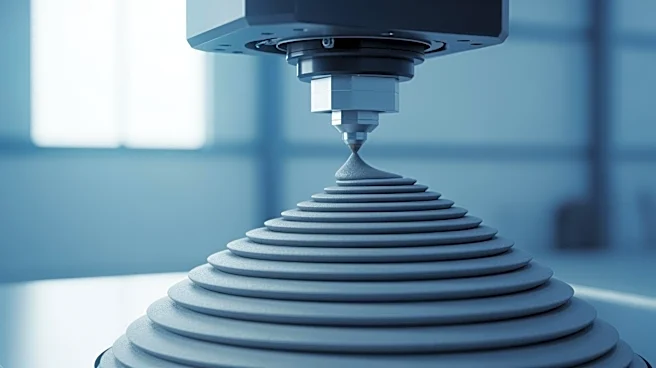
Branch Technology Inc., a company based in Chattanooga, Tennessee, has developed an innovative 3D printing process known as Freeform 3D Printing. This technology, initially advanced through NASA's efforts to create a lunar habitat, is now being applied
to construction on Earth. The process involves creating shapes with lightweight lattice structures that can be filled or covered, allowing for the production of visually appealing and modular building elements such as wall panels and cladding. This method significantly reduces the amount of material needed compared to traditional solid printing techniques. Branch Technology's advancements were spurred by their participation in NASA's 3D-Printed Habitat Challenge, which aimed to develop habitats for deep space exploration. The company's collaboration with NASA's Marshall Space Flight Center has led to the development of unique nozzles and materials, including a basalt fiber-reinforced plastic, which are now being used in terrestrial construction.
Why It's Important?
The application of NASA's space technology to Earthly construction represents a significant advancement in building efficiency and sustainability. By reducing material usage, Branch Technology's Freeform 3D Printing process not only lowers costs but also minimizes environmental impact. This innovation aligns with broader industry trends towards sustainable construction practices. The ability to create modular and customizable building elements could revolutionize the construction industry, offering new possibilities for architectural design and urban development. Additionally, the technology's origins in space exploration highlight the potential for cross-industry innovation, where solutions developed for space can have profound impacts on Earth-based industries.
What's Next?
Branch Technology is likely to continue refining its 3D printing techniques and expanding its applications in the construction industry. As the technology gains traction, it may attract interest from architects and builders seeking sustainable and cost-effective building solutions. The collaboration with NASA could also lead to further innovations, potentially influencing future space missions and terrestrial applications. Stakeholders in the construction and technology sectors will be watching closely to see how this technology evolves and integrates into mainstream construction practices.
Beyond the Headlines
The development of Freeform 3D Printing technology also raises questions about the future of construction labor and the skills required in the industry. As automation and advanced manufacturing techniques become more prevalent, there may be a shift in the types of jobs available, with a greater emphasis on technical skills and design expertise. Additionally, the use of space-derived technologies in everyday applications underscores the importance of continued investment in space exploration, as it can lead to unexpected benefits and innovations that enhance life on Earth.