
What's Happening?
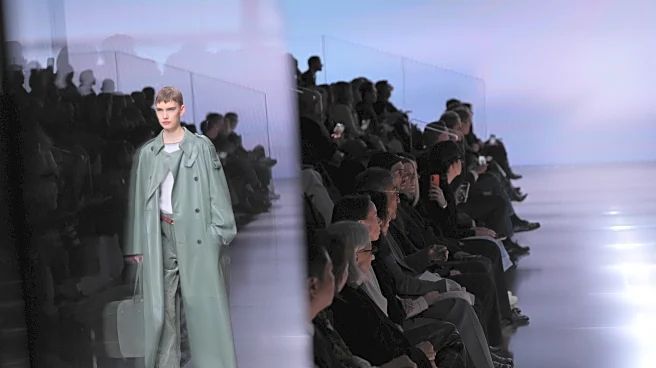
Gucci has unveiled its latest collection, which prominently features street style elements such as shoulder-slung bum bags, bare midriffs, and double G thongs. The collection, presented during Milan Fashion Week, marks the debut of creative director Demna's
vision for the brand. The show included a mix of tailored suits, light-wash jeans, and tight T-shirts, highlighting a blend of high fashion and streetwear sensibilities. The collection also introduced innovative designs like leggings fused with trousers and footwear combining leather shoes with trainers. This approach aims to resonate with both established and new clientele, as Gucci seeks to maintain its relevance in the competitive luxury market.
Why It's Important?
Gucci's latest collection reflects a strategic shift towards embracing street style, a move that could redefine its brand identity and appeal to a broader audience. This change is significant as Gucci faces challenges in maintaining its market position amid declining sales. By integrating streetwear elements, Gucci aims to attract a younger, more diverse consumer base that values authenticity and practicality. The collection's success could influence trends in the luxury fashion industry, prompting other brands to adopt similar strategies. Additionally, the collection's reception will be closely watched by the parent company, Kering, as it assesses Gucci's potential for renewed growth.
What's Next?
The success of Gucci's new collection will be evaluated in the coming months, as Kering monitors sales and consumer feedback. The brand's ability to connect with its target audience will be crucial in determining its future direction. Gucci's emphasis on creating 'desirable and authentic objects' suggests a focus on practicality and consumer needs, which could lead to further innovations in design and marketing strategies. The fashion industry will be observing how Gucci's approach influences broader market trends and whether it can regain its momentum in the luxury sector.