




What's Happening?
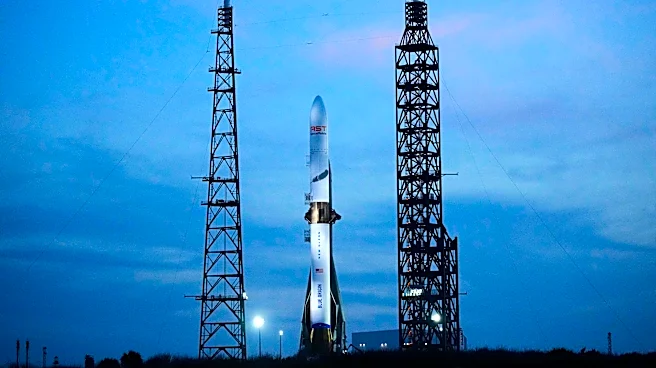
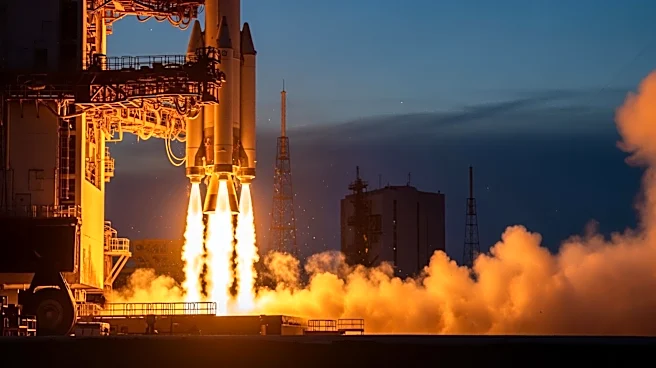
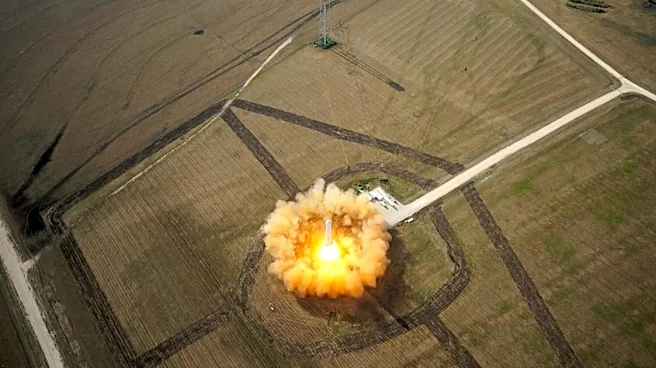
United Launch Alliance (ULA) successfully launched 29 Amazon Leo broadband internet satellites on an Atlas 5 rocket from Cape Canaveral Space Force Station. The launch faced weather challenges, with only a 30% chance of acceptable conditions. Despite
this, liftoff occurred at 7:53 p.m. EDT. This mission, named Amazon Leo 7, is part of Amazon's plan to deploy a constellation of over 3,200 satellites to provide global internet coverage. The launch was the seventh batch of production satellites for Amazon and the penultimate mission using an Atlas 5 rocket. Amazon has purchased 47 launches from ULA, including 38 Vulcan rockets and nine Atlas 5 rockets.
Why It's Important?
The successful launch of Amazon Leo satellites is a significant step in expanding global internet access, particularly in underserved regions. This satellite constellation aims to provide high-speed internet to remote areas, enhancing connectivity and bridging the digital divide. The mission also highlights the collaboration between Amazon and ULA, showcasing the growing role of private companies in space exploration and satellite deployment. As Amazon progresses towards its goal of deploying half its constellation by July 2026, these launches are crucial for meeting regulatory requirements and advancing technological capabilities.
What's Next?
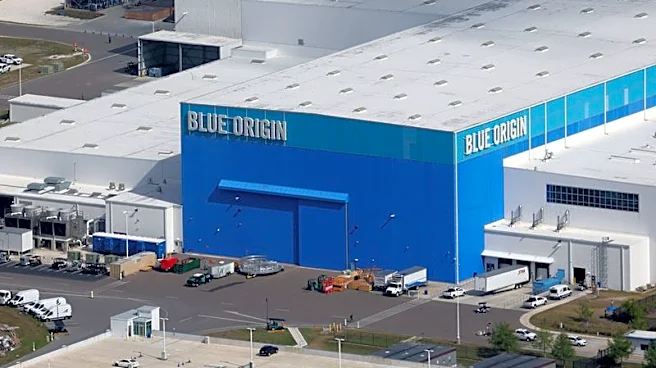
Amazon plans to continue launching its satellite constellation, with the final Atlas 5 rocket mission scheduled for July 2026. The company is also awaiting the debut of Blue Origin's New Glenn rockets, although recent setbacks may delay these plans. Amazon's request to relax the Federal Communications Commission's requirement for half the constellation's operation by July 2026 is under evaluation. The success of these missions will be pivotal in achieving Amazon's goal of global internet coverage and meeting regulatory deadlines.