







What's Happening?
Japanese artist Kohei Nawa has launched his first solo exhibition in Los Angeles, titled 'Photon Camp,' at the Pace Gallery. The exhibition features Nawa's renowned 'PixCell' and 'Prism' series, which explore the intersection of art and the virtual world.
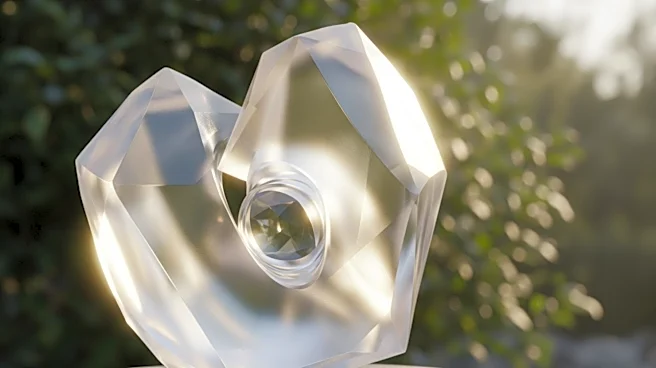
Nawa's 'PixCell' sculptures, which began in 2002, encase taxidermied animals and objects in transparent spheres, creating a unique visual experience. The 'Prism' series complements this by using optical manipulation to transform the perception of objects. Nawa's work is influenced by Surrealism and the Japanese concept of 'drifting objects,' reflecting on how digital media reshapes human perception. The exhibition aims to blur the lines between artwork and environment, creating an immersive experience that challenges viewers' understanding of reality.
Why It's Important?
Kohei Nawa's exhibition in Los Angeles is significant as it brings a fresh perspective on how digital and physical realities intersect in art. By showcasing his work in a major U.S. city, Nawa introduces American audiences to his unique approach, which combines traditional Japanese cultural elements with modern digital influences. This exhibition highlights the evolving nature of art in the digital age, where boundaries between the virtual and the real are increasingly blurred. It also underscores the global nature of contemporary art, as artists like Nawa bring diverse cultural perspectives to international audiences. The exhibition's focus on 'drifting objects' and the impact of digital media on perception resonates with broader societal themes of globalization and technological advancement.
What's Next?
Following the Los Angeles exhibition, it is likely that Kohei Nawa will continue to explore and expand his artistic themes, potentially leading to further international exhibitions. The reception of 'Photon Camp' in Los Angeles could influence future collaborations and opportunities for Nawa in the U.S. art scene. Additionally, the themes explored in the exhibition may inspire other artists to examine the relationship between digital media and physical reality, contributing to ongoing discussions about the role of technology in art. As Nawa's work gains more visibility, it may also prompt further academic and critical analysis, enriching the discourse on contemporary art and its intersection with technology.