



What's Happening?
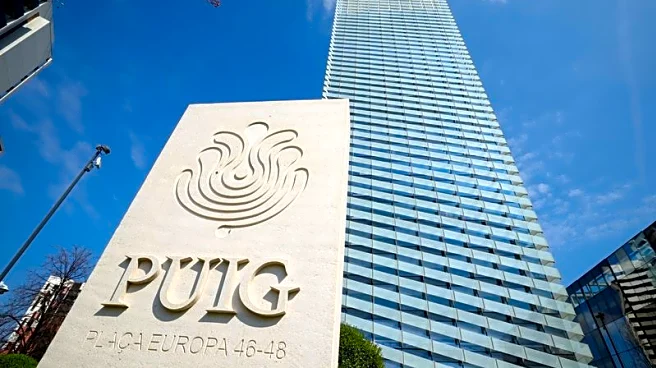
Estée Lauder, a leading U.S. cosmetics company, is in discussions with Puig, a Spanish firm known for brands like Rabanne and Charlotte Tilbury, about a potential merger. This merger could create a company valued at $40 billion. Estée Lauder has been
facing financial difficulties, including an 80% drop in share price since 2021, largely due to decreased demand in China and an over-reliance on travel retail. In response, the company initiated a restructuring program in 2024 to focus more on North America and the Asia-Pacific region. Puig, which went public in 2024, has also seen its shares decline by nearly 30%. However, news of the merger talks led to a 15% increase in Puig's share price, while Estée Lauder's shares fell by 9%, reflecting investor concerns about the merger's execution risks.
Why It's Important?
The potential merger between Estée Lauder and Puig is significant as it could form one of the world's most influential beauty conglomerates. For Estée Lauder, the merger represents an opportunity to strengthen its position in the fragrance market and expand its global reach. However, both companies are currently navigating financial challenges, which could complicate the merger process. The mixed investor reactions highlight concerns about the execution risks associated with such a large-scale merger, especially during a period of financial restructuring for Estée Lauder. The outcome of these talks could have substantial implications for the global beauty industry, affecting market dynamics and competitive strategies.
What's Next?
If the merger proceeds, it will require careful navigation of financial and strategic challenges. Both companies will need to address investor concerns about execution risks and demonstrate the strategic benefits of the merger. The integration process will likely involve significant organizational changes and could face regulatory scrutiny. Stakeholders will be closely monitoring the developments, as the merger could reshape the competitive landscape of the beauty industry. The success of this merger will depend on the companies' ability to effectively combine their operations and leverage their combined strengths to overcome current market pressures.