
What's Happening?
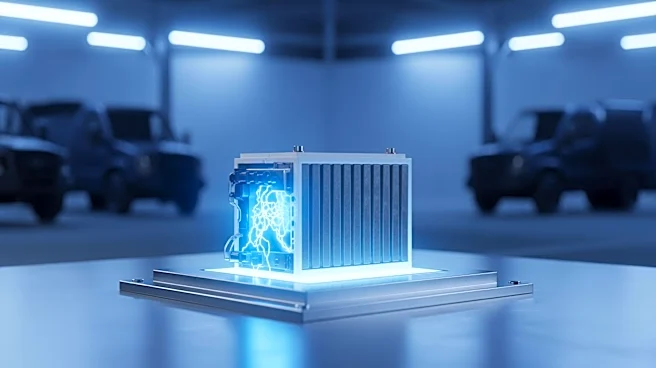
BattSwap, a Czech tech company specializing in electric vehicles with swappable batteries, reported a significant fourfold increase in revenue for the year 2025. The company has introduced a commercial
battery-swapping system designed for fleet operations in Europe. This system allows for rapid battery replacement, addressing two major challenges in the electrification of commercial fleets: lengthy charging times and limited grid capacity. The swapping stations, powered by robotics, can replace a depleted battery with a fully charged one in under three minutes, using only a tenth of the power required by standard fast chargers. BattSwap's compact vans, equipped with a 25 kWh battery pack, are tailored for urban delivery, offering a range of approximately 120 km per run. The company has completed over 65,000 battery swaps and driven nearly 2 million km in commercial service, demonstrating high system reliability and profitable operations without subsidies.
Why It's Important?
The advancements made by BattSwap are crucial in the push towards sustainable urban logistics. By reducing charging times and minimizing the need for extensive infrastructure upgrades, BattSwap's technology offers a viable solution for fleet operators looking to transition from fossil fuels to electric mobility. This development not only supports environmental goals but also presents economic benefits, as the system's lower running costs compared to diesel can lead to significant savings for businesses. The company's success in scaling its operations and securing strategic partnerships indicates a growing acceptance and demand for innovative electric vehicle solutions, potentially influencing broader industry trends and encouraging further investment in green technologies.
What's Next?
BattSwap plans to leverage its recent revenue growth and strategic partnerships to expand its market presence internationally. The company aims to establish its battery-swapping technology as a standard for urban logistics, potentially influencing other regions to adopt similar systems. As BattSwap continues to scale its manufacturing and deployment capabilities, it may face increased competition from other companies seeking to capitalize on the growing demand for electric mobility solutions. Additionally, regulatory changes and incentives for electric vehicle adoption could further impact BattSwap's expansion strategy and market dynamics.