



What's Happening?
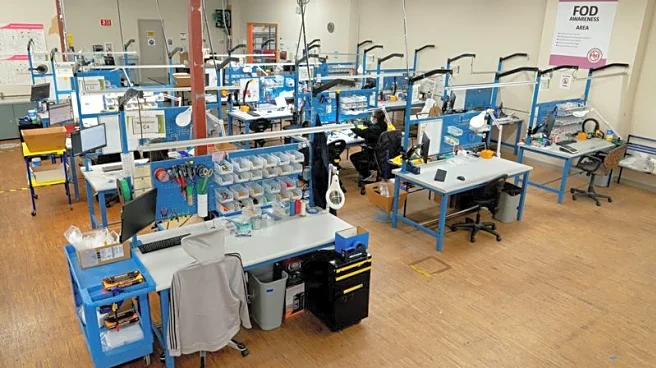
AeroVironment, Inc. (AV), a leader in defense and aerospace solutions, has announced a significant expansion of its manufacturing operations in Albuquerque, New Mexico. The company plans to invest over $30 million to enhance its facilities, which are
integral to its Space & Directed Energy Group. This expansion is supported by a $6 million incentive package from the State of New Mexico and the City of Albuquerque, aimed at job creation. The investment will bolster AV's capabilities in producing advanced defense technologies, including laser communications and counter-UAS systems. The expansion is expected to generate more than $670 million in economic impact over the next decade and create over 450 high-wage jobs, strengthening New Mexico's role in the U.S. defense industrial base.
Why It's Important?
This expansion underscores the strategic importance of Albuquerque as a hub for advanced manufacturing and defense technology. By increasing its production capacity, AeroVironment is poised to meet the growing demand for defense and aerospace solutions, which are critical to national security. The creation of high-wage jobs will boost the local economy and enhance the region's technological workforce. Additionally, the investment aligns with federal priorities to strengthen domestic supply chains and ensure the timely delivery of mission-critical capabilities. This move not only benefits AeroVironment but also positions New Mexico as a key player in the defense sector, potentially attracting further investments and partnerships.
What's Next?
As AeroVironment expands its operations, the company will likely focus on scaling its production capabilities to meet increasing demand. The partnership with New Mexico and Albuquerque may lead to further collaborations, enhancing the state's reputation as a center for defense innovation. The success of this expansion could encourage other defense contractors to invest in the region, fostering a robust ecosystem for advanced manufacturing. Additionally, the creation of new jobs will require workforce development initiatives to ensure a skilled labor pool, potentially leading to educational partnerships and training programs.