





What's Happening?
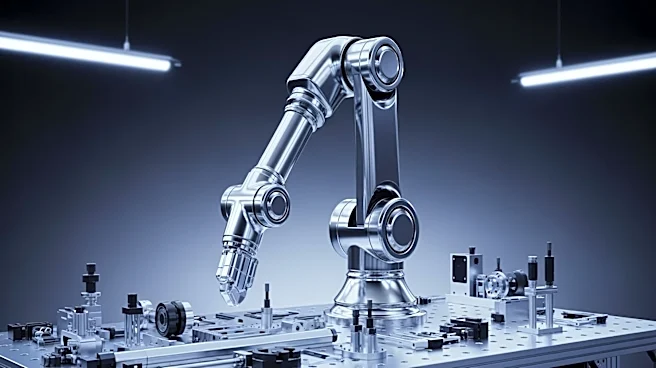
Doozy Robotics, a Singapore-based company specializing in Physical AI humanoids, has announced a global expansion across the United States, GCC, and Asia. This move is part of their strategy to address the growing labor shortages by deploying AI-powered
humanoid robots in industrial settings. The company, backed by investors like Cocoon Capital, is developing a vertically integrated ecosystem that includes an 'Industrial Super Humanoid', autonomous mobile robots, and forklifts, all managed by their proprietary Eywa-OS. This system is designed to function as an intelligent factory manager, dynamically allocating resources and adapting to disruptions. The expansion is set against a backdrop of significant labor shortages, with projections indicating a potential $1 trillion negative impact on the U.S. GDP by 2030 due to these constraints.
Why It's Important?
The expansion of Doozy Robotics into the U.S. market is significant as it addresses the critical issue of labor shortages, which are expected to have a substantial economic impact. By introducing AI-powered humanoids, Doozy aims to transform factory operations, making them more efficient and less reliant on human labor. This shift could lead to a reduction in operational costs and an increase in productivity, benefiting industries facing workforce challenges. The company's Robot-as-a-Service model also offers a flexible, scalable solution for businesses, turning automation into an operational service rather than a capital expenditure. This approach could accelerate the adoption of robotics in various sectors, potentially reshaping the industrial landscape.
What's Next?
Doozy Robotics plans to launch its Industrial Super Humanoid in Q3 2026, with initial deployments following soon after. The company is also extending its Robot-as-a-Service model, allowing customers to scale their use of humanoids and robots based on production demands. This expansion is expected to attract significant interest from industries facing labor shortages, and Doozy's existing partnerships with major companies like Daimler and Carrier suggest a strong market potential. As the company continues to grow, it may face challenges related to integration and adaptation of its technology in diverse industrial environments.