






What's Happening?
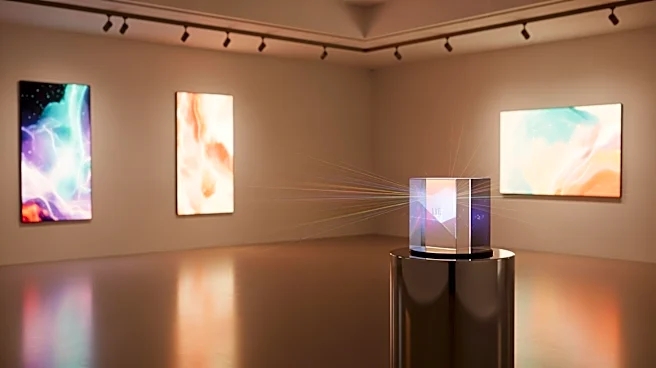
Dataland, the world's first museum dedicated to AI arts, has opened in Los Angeles, spearheaded by Turkish-American artist Refik Anadol. Located at The Grand LA, the museum spans 35,000 square feet and features five galleries designed for immersive, 360-degree
art experiences. The inaugural exhibition, 'Machine Dreams: Rainforest,' is an audiovisual installation based on millions of images and sounds from nature, inspired by Anadol's visit to the Amazon rainforest. The museum aims to explore the relationship between machine intelligence and the natural world, using data collected from 16 rainforests globally and partnerships with institutions like the Smithsonian and the Cornell Lab of Ornithology. Anadol emphasizes transparency in data sourcing and sustainability, with the museum's operations powered by renewable energy.
Why It's Important?
The opening of Dataland marks a significant moment in the intersection of art and technology, highlighting the growing influence of AI in creative fields. This development is crucial as it addresses ongoing debates about the ethical implications of AI art, including issues of copyright, environmental impact, and bias in AI-generated content. By using responsibly sourced data and focusing on sustainability, Dataland sets a precedent for future AI art initiatives. The museum's approach could influence public perception and acceptance of AI in art, potentially benefiting artists who incorporate AI into their work. It also raises questions about the role of human agency in art and the potential for AI to contribute to cultural and artistic discourse.
What's Next?
As Dataland establishes itself, it may face scrutiny from critics who question the artistic value of AI-generated works. The museum's commitment to ethical practices and sustainability could serve as a model for other institutions exploring AI art. Future exhibitions and collaborations with diverse communities, like the Yawanawá people of the Amazon, may further shape the narrative around AI's role in art. The museum's success could lead to increased investment in AI art and inspire similar projects worldwide, potentially expanding the dialogue on technology's impact on creativity and culture.
Beyond the Headlines
Dataland's opening comes at a time when AI art is both celebrated and criticized for its lack of human agency and potential biases. The museum's focus on ethical data use and environmental responsibility highlights broader societal concerns about AI's impact. By collaborating with indigenous communities and emphasizing transparency, Dataland challenges traditional notions of art and technology, encouraging a reevaluation of how these fields intersect. This approach may influence future policies and practices in AI art, promoting a more inclusive and responsible use of technology in creative industries.