








What's Happening?
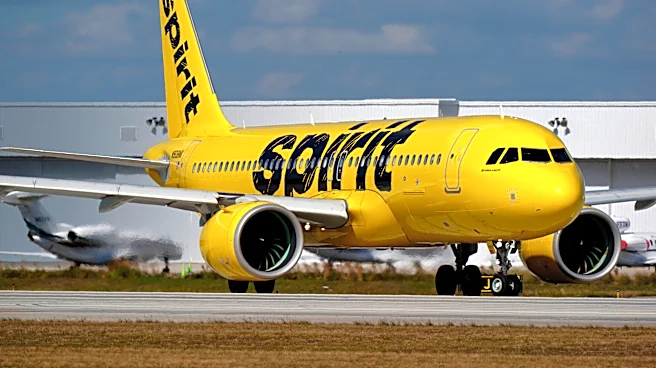
Spirit Airlines, a major budget carrier in the United States, has announced the cessation of its operations, leaving 17,000 employees without jobs. The airline's shutdown follows unsuccessful attempts to secure a $500 million bailout from the Trump administration.
The recent spike in aviation fuel prices, exacerbated by the US-Israel conflict with Iran, has been cited as a critical factor in the airline's financial collapse. Spirit Airlines, which had previously filed for bankruptcy twice in recent years, was unable to withstand the increased costs and competitive pressures in the aviation market. The airline's parent company, Spirit Aviation Holdings, confirmed the immediate cancellation of all flights and advised passengers not to go to the airport.
Why It's Important?
The collapse of Spirit Airlines highlights the vulnerability of budget carriers to external economic shocks, such as rising fuel prices and geopolitical instability. As a pioneer of the ultralow-cost carrier model, Spirit's failure raises concerns about the sustainability of similar business models in the aviation industry. The shutdown not only affects thousands of employees and passengers but also signals potential challenges for other airlines operating under similar conditions. The situation underscores the need for robust financial strategies and contingency plans to navigate volatile market conditions.
What's Next?
The aviation industry may see increased consolidation as airlines with stronger financial positions seek to acquire assets or market share from struggling competitors. The focus will likely shift towards enhancing operational efficiency and exploring alternative revenue streams to mitigate the impact of fluctuating fuel prices. Additionally, regulatory bodies and industry stakeholders may need to reassess support mechanisms for airlines facing financial distress. The response to Spirit's collapse will be crucial in shaping the future landscape of budget air travel.
Beyond the Headlines
Spirit Airlines' shutdown reflects broader economic and geopolitical dynamics affecting the aviation sector. The interplay between global conflicts, energy markets, and airline operations highlights the interconnectedness of these factors. The situation also raises questions about the role of government intervention in supporting struggling industries and the criteria for such assistance. As the industry adapts to these challenges, the emphasis on resilience and adaptability will become increasingly important.