
What's Happening?
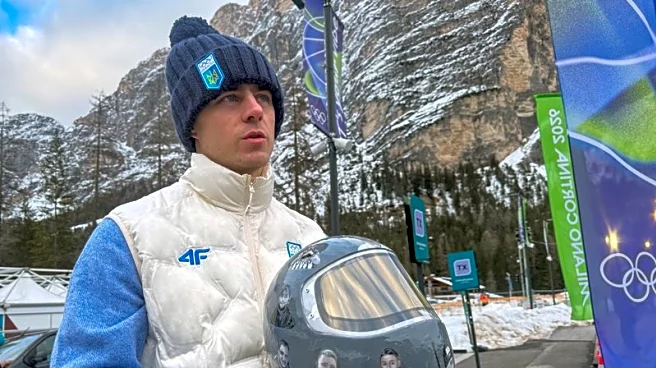
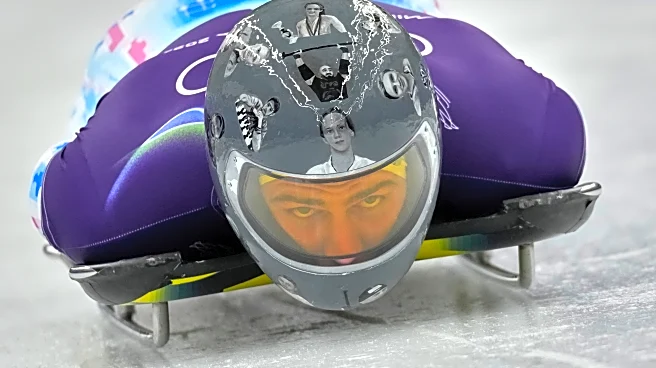
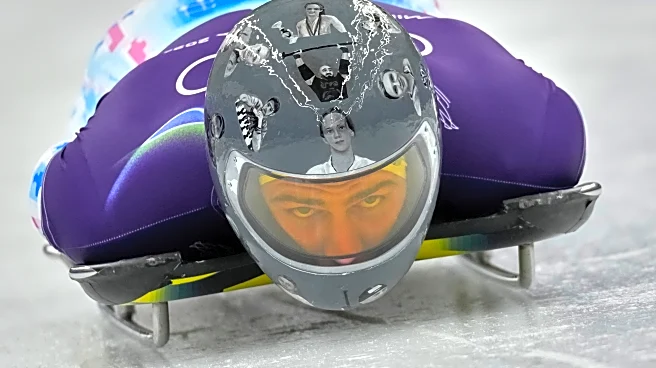
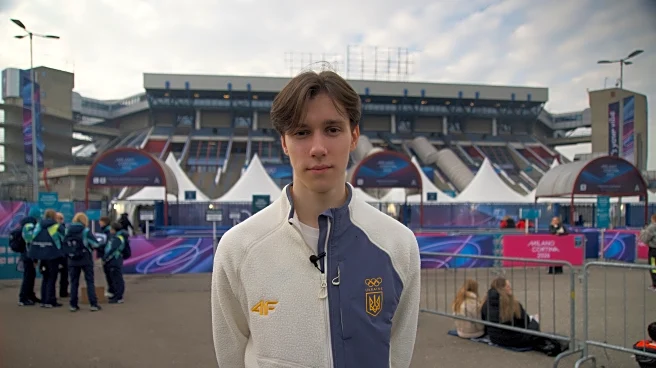
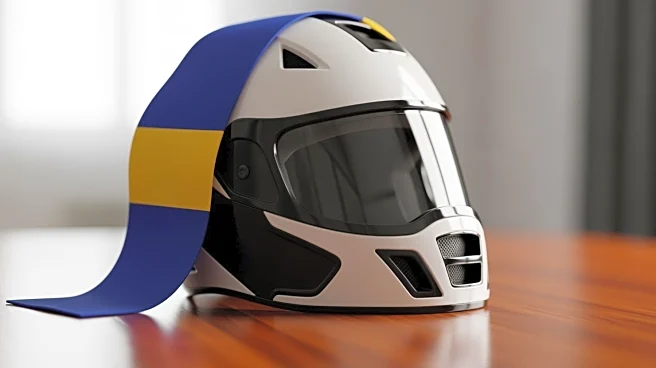
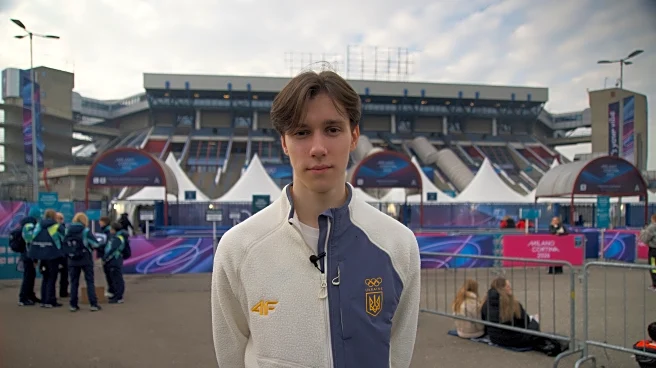
Ukrainian skeleton racer Vladyslav Heraskevych has been barred by the International Olympic Committee (IOC) from using a custom helmet at the 2026 Winter Olympics. The helmet, which features portraits of Ukrainian athletes killed during Russia's invasion, was intended to honor these individuals. Heraskevych expressed his disappointment on social media, stating that the IOC's decision feels like a betrayal to athletes who were part of the Olympic movement. The helmet includes images of athletes such as figure skater Dmytro Sharpar and biathlete Yevhen Malyshev, both of whom died in the conflict. Ukrainian President Volodymyr Zelensky supported Heraskevych, emphasizing the helmet's role in highlighting the cost of Ukraine's struggle and the Olympic movement's
mission for peace.
Why It's Important?
The IOC's decision has sparked a debate about the intersection of sports and politics, particularly in the context of ongoing conflicts. By prohibiting the helmet, the IOC aims to maintain neutrality in sports, yet this action has been perceived by some as ignoring the realities faced by Ukrainian athletes. The controversy highlights the challenges international sports organizations face in balancing political sensitivities with the personal expressions of athletes. This decision could influence how future sporting events handle similar situations, potentially affecting the IOC's reputation and its relationship with athletes from conflict-affected regions.
What's Next?
The ongoing Winter Olympics in Milan will continue under the shadow of this controversy. It remains to be seen how the IOC will address similar issues in the future, especially as global conflicts continue to impact athletes. The decision may prompt discussions within the IOC about revising policies related to political expressions in sports. Additionally, the response from the international community and other athletes could pressure the IOC to reconsider its stance or provide clearer guidelines on such matters.