






What's Happening?
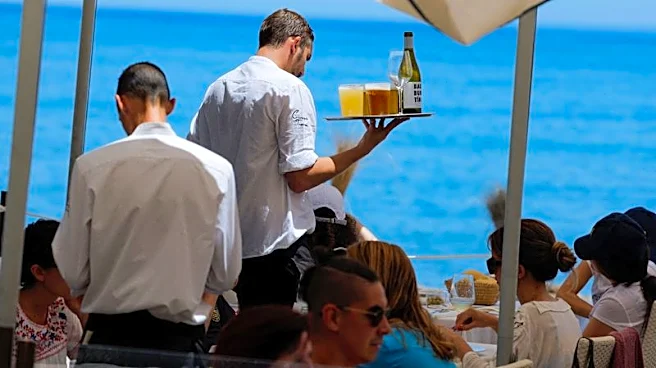
An American expatriate, who has been living in Spain for seven years, shares insights into the cultural differences between the U.S. and Spain, particularly in terms of daily schedules and social life. The expatriate notes that in Spain, meals are more
leisurely and social, with lunch often starting after 2 p.m. and lasting until 4 p.m. This contrasts with the U.S., where workday lunches are typically quick. The expatriate also highlights the Spanish tradition of 'sobremesa,' where people linger at the table after meals to enjoy conversation and connection. Additionally, the expatriate observes that vacations are a significant part of life in Spain, with full-time workers entitled to at least 30 days of paid leave, unlike the U.S., where paid time off is less standardized.
Why It's Important?
The expatriate's experiences underscore the cultural emphasis on work-life balance and social connections in Spain, which contrasts with the often fast-paced and work-centric lifestyle in the U.S. This difference highlights the potential benefits of adopting a more relaxed approach to daily life, which could lead to improved mental health and stronger social bonds. The emphasis on extended meal times and vacations in Spain suggests a societal value placed on personal well-being and community, which could serve as a model for other cultures seeking to enhance quality of life. The insights also provide a perspective on how cultural norms can shape individual experiences and priorities.