



What's Happening?
Peloton, known for its at-home fitness solutions, is expanding its in-person class offerings to strengthen community ties and enhance user experience. The company reopened its in-person classes in 2022 and plans to triple these events by 2026, including
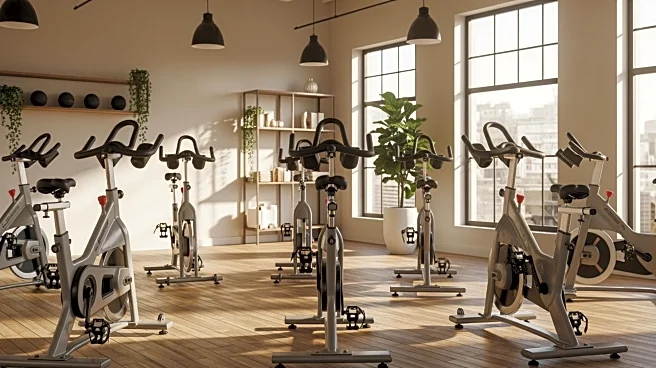
collaborations with major events like SXSW and the London Marathon. This move comes as Peloton seeks to maintain its competitive edge in the fitness industry, following a pandemic-era surge in subscribers and a subsequent slowdown. The in-person classes, held in Peloton's pristine studios in New York, are designed to feel like exclusive events, offering a unique experience that combines intense workouts with the brand's signature affirming energy. These classes are highly sought after, with fans often registering weeks in advance, akin to securing Broadway tickets.
Why It's Important?
Peloton's strategy to increase in-person classes highlights the importance of human connection in retaining its membership base. By offering these exclusive events, Peloton differentiates itself from other at-home fitness competitors and traditional gyms. This approach not only enhances the brand's community feel but also leverages the popularity of its instructors, who have become celebrities in their own right. The expansion of in-person classes could potentially boost Peloton's market position by attracting new subscribers and retaining existing ones, especially as the fitness industry continues to evolve post-pandemic. This move underscores the significance of experiential offerings in consumer engagement and brand loyalty.
What's Next?
Peloton's focus on in-person events suggests a strategic shift towards hybrid fitness solutions, combining the convenience of at-home workouts with the social and motivational benefits of group classes. As the company plans to collaborate with high-profile events, it may attract a broader audience and increase brand visibility. However, Peloton is not currently investing in new studio locations, indicating a cautious approach to expansion. The success of this strategy will likely depend on the company's ability to maintain the exclusivity and quality of its in-person experiences while managing operational costs and market competition.